When a security alert appears, your team needs to know whether it points to a problem on one device or a wider incident across the business.
The difference between EDR vs SIEM comes down to the scope of detection and investigation. Endpoint Detection and Response (EDR) examines endpoint activity, while Security Information and Event Management (SIEM) connects events across multiple data sources.
The choice depends on what your business needs to detect, how much visibility your security team requires, and which tools it can manage effectively. Understanding the key differences, practical use cases, and how EDR and SIEM work together can help you make the right decision.
What is EDR and How Does It Work?
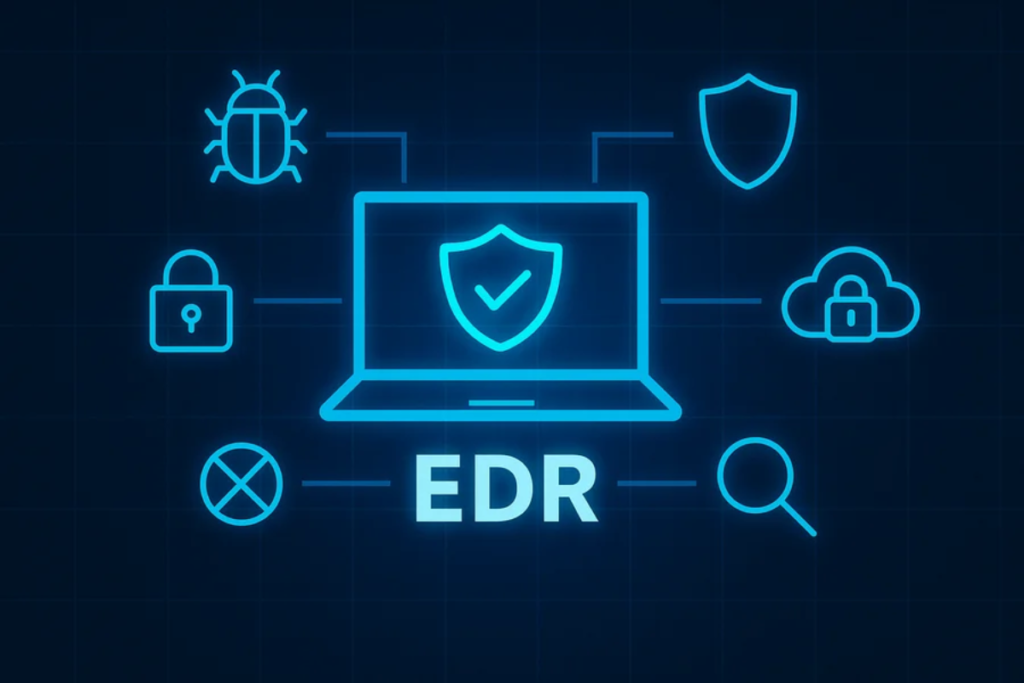
Endpoint Detection and Response (EDR) is a security tool that monitors devices such as laptops, desktops, and servers for signs of a cyberattack. It records endpoint activity, detects suspicious behavior, and helps security teams investigate and contain threats.
Unlike tools that focus mainly on blocking known threats, EDR can help teams investigate activity that looks unusual or may signal a new attack. Depending on the product, it can also isolate a device or stop a harmful process.
For example, an employee might open a file that starts running suspicious commands. EDR can flag the activity, show what happened on the device, and help the security team stop the threat before it spreads.
EDR gives security teams a closer view of activity on individual devices. However, it may not show the full picture when an attack involves email, cloud services, user accounts, and network systems. This makes endpoint security an important part of a broader strategy to protect business devices and reduce security risks.
What is SIEM and What Does It Do?
Security Information and Event Management (SIEM) collects and analyzes security data from different parts of a business. This includes data from devices, servers, networks, cloud services, and user accounts.
SIEM tools look for patterns across these records. By connecting events that might seem harmless on their own, they can help security teams spot suspicious activity across multiple systems.
Consider a user who signs in from an unusual location, opens a sensitive file, and then triggers several failed login attempts. A SIEM tool can connect these events and alert the security team to possible suspicious activity.
SIEM tools can also help teams respond to threats by sending alerts and working with other security tools. Their effectiveness depends on the data they collect, how well they are set up, and whether the security team acts on the alerts.
SIEM provides a broader view of security events across connected systems, rather than focusing on a single device.
What is the Difference Between EDR vs SIEM?
The main difference between EDR vs SIEM is what they monitor. EDR detects and responds to threats on individual devices, while SIEM analyzes security data from different systems to spot wider threats.
The table below compares their main functions and the work involved in running each tool.
| Factor | EDR | SIEM |
| Primary purpose | Detect, investigate, and respond to endpoint threats | Collect and analyze security events across systems |
| Data sources | Laptops, desktops, servers, and other supported endpoints | Endpoints, networks, servers, cloud services, identity systems, and other connected sources |
| Threat detection | Flags suspicious activity on monitored devices | Connects events across sources to find suspicious patterns |
| Investigation | Shows endpoint activity and details about a threat | Helps link events across systems and build a wider incident timeline |
| Response | May isolate devices, stop processes, or take other endpoint actions | May trigger workflows or actions through supported integrations |
| Visibility | Detailed view of supported endpoints | Broader view of the connected IT environment |
| Management needs | Requires alert review, tuning, and response planning | Requires data source setup, rule tuning, log management, and ongoing review |
| Cost factors | Product licensing, endpoint count, and available features | Licensing, data volume, storage, retention, integrations, and management effort |
| Best suited for | Detecting and containing threats on devices | Connecting security events across an organization |
What Happens During an Attack in EDR vs SIEM?
Imagine an attacker steals an employee’s login details and uses them to access a company laptop and a cloud account.
- EDR can examine suspicious activity on the monitored laptop, such as an unusual process or a harmful file, and help contain the device.
- SIEM can connect the login event with activity from the laptop, cloud account, and other systems if those records are collected.
- Together, they can give the security team both endpoint-level evidence and a broader view of the incident.
Neither tool guarantees that every attack will be detected. Results depend on the data available, the quality of detection rules, and how quickly the security team responds.
Can EDR and SIEM Work Together?

Yes. EDR and SIEM can work together to connect endpoint activity with security events across the business. EDR supplies detailed information about device-level threats, while SIEM helps analysts see how those events relate to activity elsewhere.
For example, EDR may detect a suspicious process on an employee’s laptop. SIEM can help analysts check whether the same account accessed cloud data or triggered alerts on other systems around the same time. This wider view can help the team judge the scope of the incident.
However, connecting the tools does not automatically guarantee better security. Teams still need to configure data sources, set useful detection rules, review alerts, and agree on who takes action.
When Should a Business Choose EDR?
A business should consider EDR when it needs to detect, investigate, and contain threats on employee devices and servers.
EDR may be the right starting point when:
- Endpoint threats are a major concern. Your business needs to investigate suspicious files, processes, or user activity on devices.
- You need to respond quickly. Your security team wants to isolate affected devices or stop harmful processes when a threat is found.
- Your team needs more than antivirus alerts. You want a clearer record of endpoint activity to investigate how an attack happened.
A strong endpoint detection and response strategy can help your team identify suspicious activity and respond before it causes wider damage.
When Does a Business Need SIEM?
A business should consider SIEM when it needs to connect security events across multiple systems. This is especially useful when an attack could involve identity accounts, cloud services, servers, networks, and endpoints.
SIEM may be a good fit when:
- Security data sits in different tools. Analysts need a central place to review events from supported systems.
- Incidents cross system boundaries. Your team needs to connect a suspicious login with later activity on a server or cloud account.
- You need wider security reporting. The business needs records and reports to support security reviews, investigations, or compliance work.
SIEM also needs regular management. Teams must decide which logs to collect, how long to keep them, and how to set rules that flag suspicious activity. Collecting more data does not always improve security. The data must be relevant, and someone needs to review the alerts and act on them.
Should Your Business Use EDR, SIEM, or Both?
Before choosing between EDR vs SIEM, identify where your current security setup falls short. For example, your team may detect suspicious activity on a laptop but struggle to connect it to unusual cloud logins or access to sensitive files.
Use these questions to guide your decision:
- Can you trace threats across systems? If you can investigate activity on a device but cannot connect it to events in your cloud accounts or network, SIEM may help fill that gap.
- Can your team act on alerts quickly? If endpoint alerts go unreviewed or incidents take too long to contain, improve your monitoring and response process before adding another tool.
- Can you manage the cost and workload? Before deploying SIEM, estimate daily log volumes, storage needs, retention periods, and the staff time required to tune alerts. For EDR, check endpoint coverage and who will investigate and respond to detections.
Choose tools based on a specific gap you need to close. If you need both endpoint-level response and a way to connect events across systems, EDR and SIEM can work together.
Conclusion:
The right security setup depends on your business needs, risks, and available resources. EDR helps detect and contain threats on endpoints, while SIEM connects security events across systems. A clear understanding of EDR vs SIEM can help you choose the tools that close your security gaps and support faster incident response.
Frequently Asked Questions
1. How much data does a SIEM need to be useful?
A SIEM needs relevant logs from key systems, such as endpoints, servers, cloud services, and identity platforms. Start with sources that match your main security risks.
2. What skills does a team need to manage EDR vs SIEM?
EDR requires endpoint investigation and threat response skills. SIEM requires knowledge of log analysis, detection rules, and event correlation. Both need regular tuning and alert reviews.
3. Can a company use SIEM without a security operations center (SOC)?
Yes, but someone must configure SIEM, review alerts, and respond to threats. A managed security provider can help cover these tasks.
4. How often should businesses review EDR and SIEM alerts?
Teams should review high-priority alerts promptly and regularly check detection rules for missed threats and false alarms.
5. Does EDR vs SIEM affect cybersecurity compliance?
Yes. EDR can provide endpoint records, while SIEM can collect logs across systems. EDR vs SIEM compliance needs depend on the regulations, required records, and how each tool is managed.