Every routine business payment can become a target when a familiar email sender is not who they claim to be. Business email compromise exploits trusted business communication to trick employees into approving fraudulent payments or sharing sensitive information. According to the FBI’s 2025 Internet Crime Report, reported BEC losses reached approximately $3.05 billion in the United States.
This guide covers common BEC tactics, warning signs, practical prevention measures, incident response, and the growing role of AI in executive impersonation.
What Is Business Email Compromise?
Business email compromise (BEC) is a targeted social engineering attack in which cybercriminals impersonate executives, employees, or trusted vendors, or take over legitimate email accounts to deceive people into transferring money or sharing confidential information.
BEC attackers commonly use email spoofing and account takeover to make fraudulent messages appear genuine:
- Email spoofing: Falsifying sender information to make an email appear to come from a trusted address.
- Email account compromise (EAC): Gaining unauthorized access to a legitimate email account to monitor conversations or send fraudulent messages.
Both methods can be used in BEC attacks to manipulate employees into transferring money or sharing sensitive information.
How Does a Business Email Compromise Attack Work?
Attackers use company research and email manipulation to carry out BEC through four common stages:
1. Researching the target:
Criminals study company websites, employee roles, supplier relationships, and publicly available business information.
2. Creating a false identity:
They use lookalike domains, spoofed email addresses, or compromised accounts to appear trustworthy.
3. Sending fraudulent requests:
Attackers contact employees with instructions involving urgent payments, invoice changes, or confidential information.
4. Stealing money or data:
Once an employee follows the instructions, funds or sensitive business information reach the attacker.
Real-world example:
In October 2023, the U.S. Department of Justice announced the civil forfeiture of $2.462 million stolen through a BEC attack targeting a company in the semiconductor supply industry. The victim received an email appearing to come from its business partner, requesting a change to payment instructions, and transferred the funds to a fraudulent account. After the fraud was reported, the funds were frozen and later forfeited and returned to the victim.
Also Read: Phishing Scam Email: How to Recognize, Prevent, and Respond
What Are the Common Types of BEC Attacks?
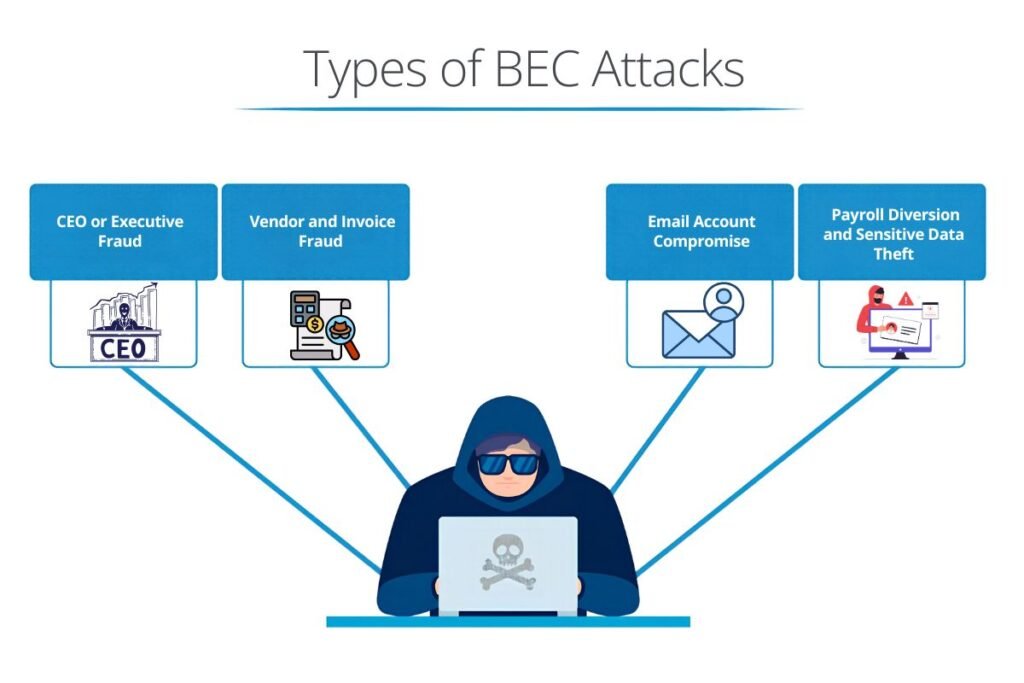
BEC attacks commonly target executives, suppliers, employee accounts, and payroll operations.
1. CEO or Executive Fraud
Attackers impersonate a CEO, CFO, or senior executive and send urgent payment requests to finance employees. They may also request gift card purchases, confidential employee records, or tax information.
2. Vendor and Invoice Fraud
Scammers impersonate suppliers or compromise their email accounts to send fraudulent invoices or change existing payment instructions. The goal is to redirect legitimate business payments into accounts controlled by criminals.
3. Email Account Compromise
Attackers gain unauthorized access to a real employee’s mailbox, often through stolen credentials or phishing. They can monitor conversations, collect financial information, and use the account to send convincing fraudulent messages.
4. Payroll Diversion and Sensitive Data Theft
Cybercriminals target HR and payroll departments with requests to change employee bank details or share sensitive records. If the request is approved without verification, salaries may be redirected to fraudulent accounts or personal information exposed.
What Are the Warning Signs of a BEC Attack?
A BEC email may look like an ordinary business message, but certain details can indicate fraudulent activity.
Employees should watch for:
- Unexpected requests for urgent wire transfers or payments.
- Sudden changes to supplier banking information.
- Slight differences in email addresses or domain names.
- Requests to bypass standard payment approval procedures.
- Unusual confidentiality instructions from senior executives.
- Unexpected payroll or direct-deposit changes.
- Suspicious mailbox forwarding rules or login activity.
A familiar sender name or an ongoing email conversation does not guarantee that a message is genuine. Employees should verify unusual financial instructions independently before taking action.
How Can Businesses Prevent Business Email Compromise?
Businesses need a combination of transaction controls, email security, and employee awareness to reduce BEC risks.
1. Introduce Independent Payment Verification
Businesses should verify new banking details and payment changes through a separate, trusted communication channel. Employees can call suppliers using previously verified phone numbers rather than relying on contact details provided in an email.
Organizations should maintain an approved vendor contact directory and require employees to confirm banking changes with an authorized supplier representative. Payment details should only be updated after independent verification and documented approval from the appropriate finance personnel.
High-value transactions should also require approval from more than one authorized person.
Before approving a payment change, employees should:
- Contact the supplier using a phone number or contact record already on file.
- Confirm the new bank details with an authorized representative.
- Obtain documented approval from the required finance personnel.
- Record the verification and approval before updating payment information.
2. Strengthen Email Account Security
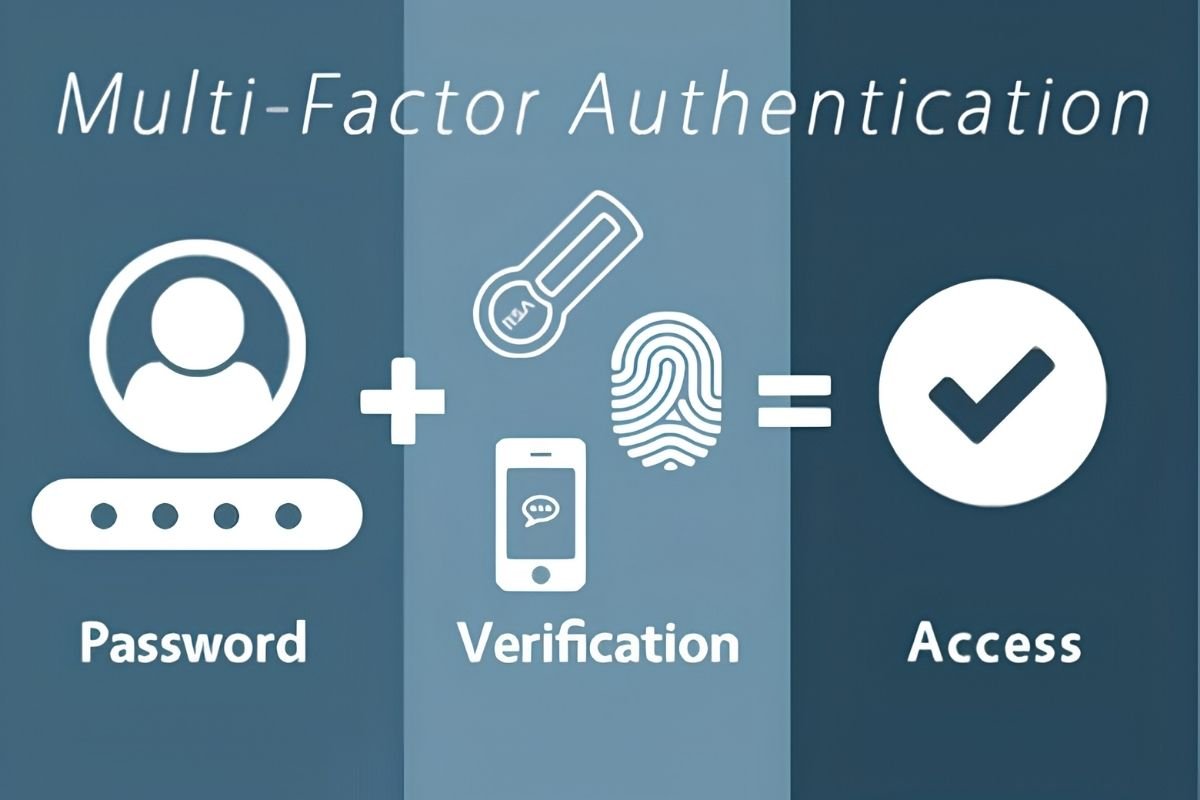
Enforce multi-factor authentication (MFA) across business email accounts, preferably using phishing-resistant methods such as FIDO2 security keys or passkeys. Apply least-privilege access so employees only have the permissions required for their roles.
Monitor unusual login attempts, unauthorized forwarding rules, and suspicious account activity. Although MFA reduces unauthorized access, it cannot prevent impersonation or every attack involving compromised email sessions. Independent verification remains essential.
3. Implement Email Authentication Protocols
Email authentication helps organizations reduce domain spoofing and improve trust in business communications.
- SPF (Sender Policy Framework): Specifies which mail servers are authorized to send emails on behalf of a domain.
- DKIM (DomainKeys Identified Mail): Adds a digital signature to outgoing emails, allowing receiving servers to check message integrity and verify the signing domain.
- DMARC (Domain-based Message Authentication, Reporting and Conformance): Uses SPF and DKIM authentication results, along with domain alignment, to tell receiving servers how to handle emails that fail DMARC checks.
These protocols help prevent unauthorized use of a company’s domain, but they cannot independently stop attackers using compromised legitimate accounts.
4. Train Employees and Secure Payment Workflows
Finance, HR, and procurement teams should receive regular training on identifying suspicious requests and social engineering tactics. Organizations should document payment approval procedures, establish clear reporting channels, and encourage employees to verify unusual instructions without fear of blame.
Also Read: What is Social Engineering? Here’s Everything You Need to Know to Protect Yourself
What Should Businesses Do After a BEC Attack?
If an organization discovers a BEC incident, immediate action can limit further losses and improve the chances of recovering transferred funds.
- Contact the bank: Immediately request a transfer recall or fraud intervention. Ask the receiving financial institution to be notified where possible.
- Secure affected accounts: Reset compromised credentials, revoke active sessions, and review authentication methods.
- Remove unauthorized access: Check for suspicious forwarding rules, mailbox permissions, and connected applications.
- Preserve evidence: Retain fraudulent emails, message headers, transaction records, and relevant access logs.
- Report the incident: Notify internal security and leadership teams and report the fraud to the appropriate law enforcement authorities.
The Role of AI in Modern Business Email Compromise Attacks
Generative AI can make BEC attempts more convincing by helping criminals create professional emails that imitate an executive’s communication style. Attackers may also use voice cloning or deepfake technology to impersonate senior employees during calls or video meetings and reinforce fraudulent payment requests.
In January 2024, Hong Kong police received a report of a fraud involving a pre-recorded video conference featuring a deepfake impersonation of a company’s UK-based CFO. The employee authorised transfers of approximately HK$200 million to five local bank accounts after receiving instructions during the meeting. Police said the fake video was created using publicly available footage and the CFO’s voice. The case shows how deepfakes can make fraudulent payment requests appear genuine.
On the defensive side, some AI-enabled email security tools analyze communication patterns and account activity to flag unusual messages or suspicious requests. These alerts can help security teams prioritize investigations, but they should not replace independent payment verification.
Automated detection is not a substitute for human verification. Businesses still need strong identity checks and financial approval controls to prevent fraudulent transactions.
Conclusion
Business email compromise exploits the trust employees place in everyday business communication. Organizations can reduce their exposure by securing email accounts, verifying payment changes independently, and establishing clear approval procedures.
Regular employee training and continuous account monitoring further strengthen these defenses. Reviewing these controls with an IT or cybersecurity partner can help businesses identify security gaps before attackers exploit them.
Frequently Asked Questions
1. What is the difference between BEC and phishing?
BEC targets business communications to steal money or sensitive data, while phishing is a broader attack that uses deceptive messages to steal information or credentials.
2. Can attackers use a legitimate business email address for BEC?
Yes. Attackers can compromise legitimate email accounts and use them to send fraudulent requests.
3. Which departments are most vulnerable to BEC attacks?
Finance, accounting, HR, procurement, and executive teams are common targets because they handle payments, sensitive data, and approvals.
4. Can MFA prevent business email compromise?
MFA reduces the risk of account takeover but cannot prevent all BEC attacks, including sender impersonation and compromised email sessions.