Buying endpoint security is not as simple as choosing the tool that blocks the most threats. You also need to know what happens when a threat slips through and whether your team can trace and contain it before it causes wider damage.
EPP and EDR serve these two needs. EPP focuses on preventing threats, while EDR helps detect suspicious activity, investigate incidents, and contain attacks. Both support endpoint security, but they address different needs.
The EDR vs EPP comparison shows how these tools differ, where their capabilities overlap, and when using both makes sense for your business.
EDR vs EPP: What Is the Difference?
The main difference between EDR and EPP is their primary role in endpoint security.
EPP and EDR protect endpoints in different ways. EPP aims to stop threats before they cause harm, while EDR helps security teams detect suspicious activity, investigate how an attack unfolds, and contain it.
The difference lies in how each technology protects a device and what it helps your team do when a threat appears.
EPP uses tools such as antivirus, firewall controls, and application restrictions to block malicious files and unsafe activity.
EDR monitors endpoint behavior and records activity that can help security teams spot threats that evade preventive controls. It can also support actions such as isolating an affected device and investigating the attack.
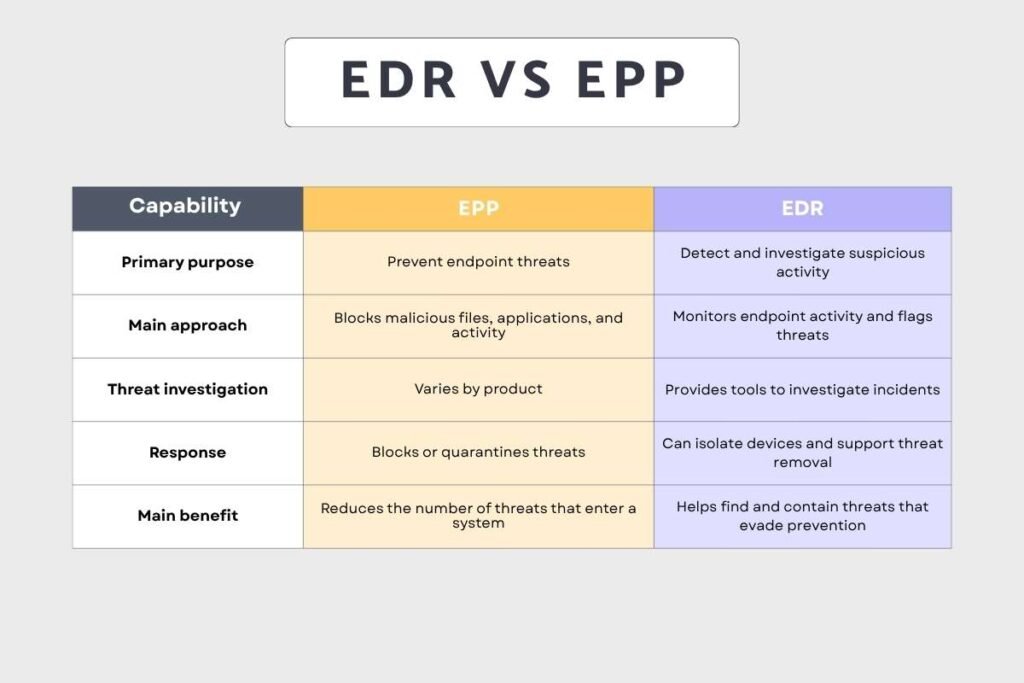
Here is a quick comparison of their core capabilities.
| Capability | EPP | EDR |
| Primary purpose | Prevent endpoint threats | Detect and investigate suspicious activity |
| Main approach | Blocks malicious files, applications, and activity | Monitors endpoint activity and flags threats |
| Threat investigation | Varies by product | Provides tools to investigate incidents |
| Response | Blocks or quarantines threats | Can isolate devices and support threat removal |
| Main benefit | Reduces the number of threats that enter a system | Helps find and contain threats that evade prevention |
These functions can overlap. Some modern security platforms combine EPP and EDR in one product, so businesses should compare actual capabilities rather than rely on product labels alone.
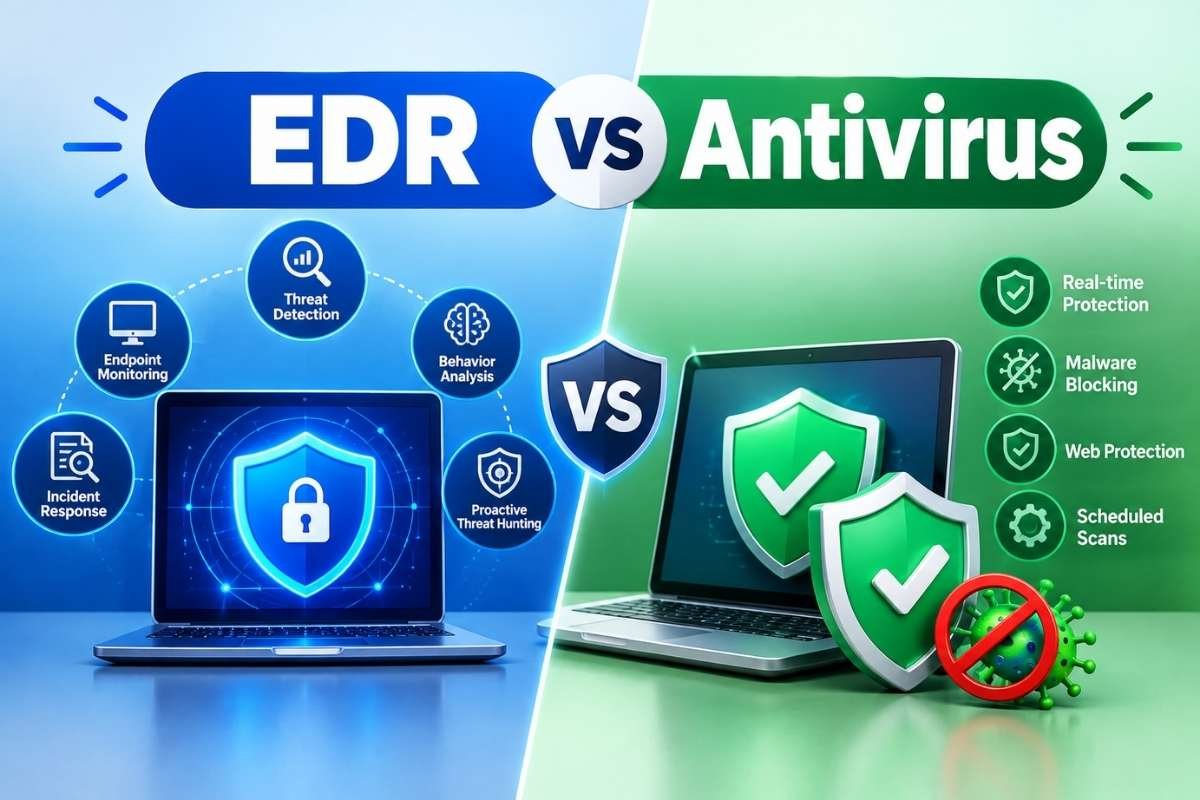
Also read: EDR vs Antivirus: How to Know Which Protection You Need
EDR vs EPP: How Do They Work Together?

EPP and EDR work together by preventing threats where possible and helping security teams respond when prevention fails.
Consider a ransomware attack on an employee’s laptop. The employee receives a malicious attachment disguised as an invoice.
First, the EPP scans the file and may block it before it runs. If the file escapes those controls and begins suspicious activity, EDR can flag the behavior, alert the security team, and help isolate the affected device. Security staff can then investigate how the attack started and check whether other devices were affected.
EPP reduces the number of threats that get through. EDR helps limit the damage when a threat gets past those defenses.
This approach also supports the broader security process described in the NIST Cybersecurity Framework, which includes protecting systems, detecting incidents, responding to them, and recovering from their effects.
Neither tool guarantees that every attack will be stopped. Their effectiveness depends on the product’s capabilities, its configuration, and how the organization manages security alerts and incidents.
When Should a Business Choose EDR, EPP, or Both?
When comparing EDR vs EPP, consider your current security controls, level of risk, and ability to respond to incidents.
- Choose EPP for core endpoint protection. Businesses need preventive controls that block malware, restrict unsafe applications, and protect devices from common threats.
- Add EDR for deeper visibility and response. Organizations that need to investigate suspicious activity, trace attacks, and contain compromised devices can benefit from EDR.
- Use both capabilities for broader protection. Businesses with sensitive data, many endpoints, or greater exposure to targeted attacks may need prevention and response capabilities working together.
A small business without a dedicated security team should also consider who will monitor alerts and investigate incidents.
EDR can provide valuable information, but its benefits may be limited if alerts go unanswered. A managed detection and response service can provide outside support when internal resources are limited.
Following endpoint security best practices, such as setting clear alert-handling procedures and defining response responsibilities, helps businesses get more value from their security tools.
EDR vs EPP: What Should You Consider Before Choosing a Solution?

The EDR vs EPP decision should depend on your security needs, existing controls, and how your team will use each solution.
Consider these five factors before making a decision:
- Prevention capabilities: Check whether the solution blocks malware, restricts unsafe applications, and detects suspicious files or behavior.
- Detection and investigation: Look for clear alerts, activity records, and tools that help security teams trace the cause and scope of an incident.
- Response options: Check whether the product can isolate a compromised device, block malicious activity, and support threat removal.
- Integration: Confirm that it works with existing endpoint security, identity, and monitoring tools.
- Cost and staffing: Consider licensing, deployment, maintenance, and the staff needed to review alerts and respond to incidents.
The National Institute of Standards and Technology (NIST) includes endpoint protection within its broader security guidance. Its endpoint protection platform definition covers safeguards such as antivirus, antispyware, and personal firewalls. NIST’s Zero Trust Architecture guidance also discusses EDR and EPP as parts of enterprise endpoint security.
For businesses with limited security staff, a platform that combines both functions may simplify management. However, a single product is useful only if it provides the protection, visibility, and response capabilities the business actually needs.
Conclusion:
To choose between EDR and EPP depends on the threats your business faces and how prepared your team is to respond. EDR vs EPP is not always an either-or decision.
EPP helps prevent threats, while EDR adds visibility, investigation, and response capabilities when suspicious activity gets through. For many businesses, combining both provides broader endpoint protection. Evaluate your existing security tools, team capacity, and risk level to choose a solution that protects devices and supports a faster response to threats.
Frequently Asked Questions
1. Can EDR and EPP run on the same endpoint?
Yes. EDR and EPP can work together through separate products or a unified security platform.
2. Is EDR or EPP better for a small business with no dedicated security team?
EPP is a good starting point. EDR offers deeper threat detection but may require a managed security service.
3. Does EDR vs EPP affect endpoint security costs?
Yes. Costs depend on licensing, features, deployment, and ongoing management. EDR may also require staff or managed services to investigate alerts.
4. When should a company upgrade from EPP to EDR?
Consider EDR when you need better visibility into endpoint activity, deeper incident investigations, or faster responses to threats that bypass prevention.