According to the CEO and president of IBM, Cybercrime is the greatest threat to every company in the world.”
With the new technology, these crimes will be harder to detect. To protect ourselves, our organizations, and our data, we need an infrastructure that will work towards protecting us from digital crimes.
And we have such infrastructure in the guise of cybersecurity firms. In this blog, we shall check out what these firms do, their importance, and how you can choose the best one for your organization.
Primary Objectives and Service Frameworks of Modern Cybersecurity Firms
Cybersecurity Firms are companies that help people and businesses stay safe online from hackers, viruses, and data theft. They use specialized tools to detect and resolve cybercrimes.
Think of these Cybersecurity Firms as a guard for your company’s data. They are expert at protecting and preserving your online systems.
Key Functions and Service Areas of IT Cybersecurity Firms
What do IT & Cybersecurity Firms do? While their work is quite versatile, we can bring it down to six main objectives. These objectives are the base of every firm.
Here’s what these firms do:
- They protect computers, networks, and cloud systems from hacking and malware.
- They watch systems 24/7 to spot unusual or risky activity.
- They help companies respond to attacks and recover data.
- They test systems for weaknesses (penetration testing, vulnerability assessments).
- They set up security tools, such as firewalls, antivirus software, and intrusion detection for your organization.
- They train employees to avoid scams and bad security habits.
And by doing so, Cybersecurity Firms provide a 360-degree protection to your organization.
Services Cybersecurity Firms Offer
1. Network Security:
The first service of any cybersecurity firms is to protect computer networks from unwanted access and attacks. It uses tools and rules to stop hackers and viruses from entering. It keeps data safe and tracks the users. They monitor the network, block threats, and promptly resolve issues. This protection happens in layers to ensure that if one layer fails, others still defend the network.
2. Cloud Security:
Cloud security protects data, apps, and systems stored online in the cloud. It stops hackers and threats from accessing or stealing information. Using tools such as encryption, firewalls, and access controls, cybersecurity firms make sure data is safe and private. Cloud providers and users share the responsibility to secure the cloud environment.
3. Endpoint Security:
With Endpoint security, cybersecurity firms protects devices like laptops, phones, and desktops from cyber threats. It blocks malware, controls app access, and encrypts data. These tools help find new attacks early. These predicted warnings allow businesses to react quickly. It keeps company data safe on all devices.
4. Identity and Access Management:
This service ensures that only authorized people can access specific systems and data. The Cybersecurity Firms use this tool to verify users’ identities and control their access based on roles. They monitor permissions to keep information safe and secure.
5. Compliance Support:
IT & Cybersecurity Firms provide compliance support to businesses, helping them comply with data regulations such as GDPR and HIPAA. Firms ensure that the data is stored and shared safely. They set up passwords and protective measures, train staff, and prepare paperwork. All of this helps avoid fines, build trust, and keep information private.
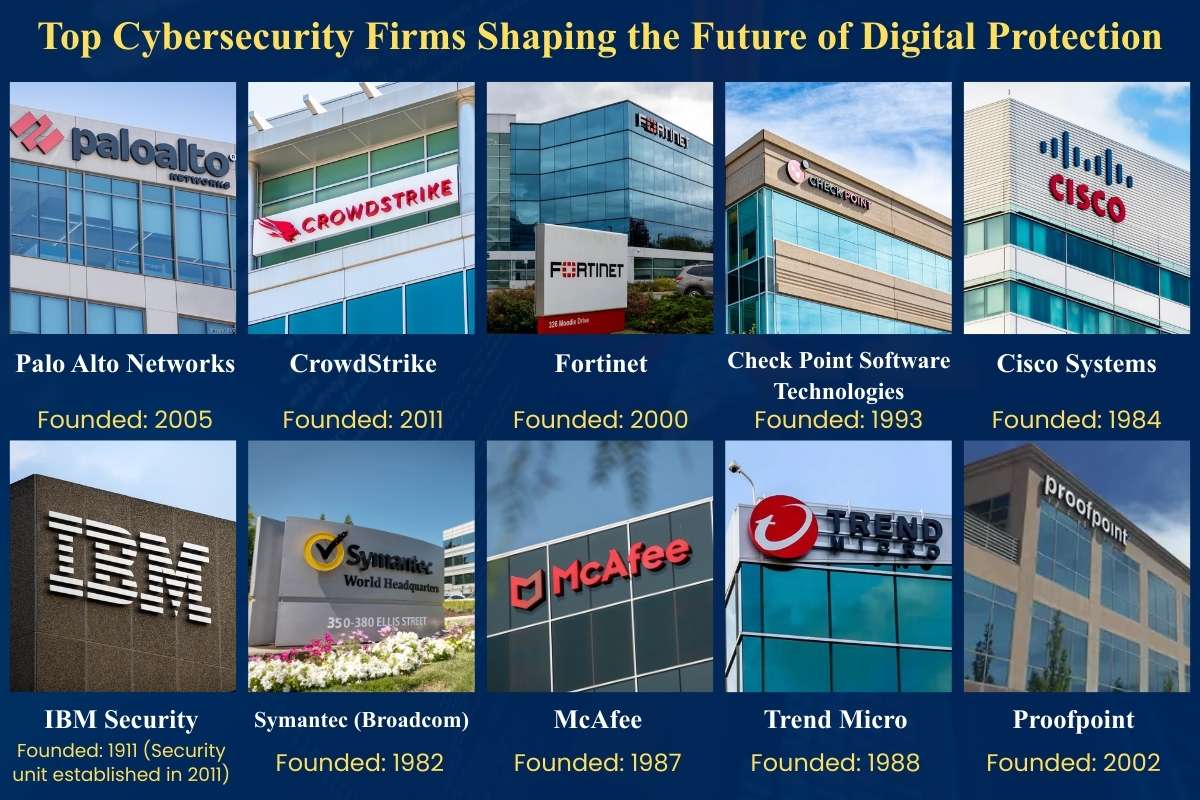
Top 25 Cybersecurity Firms Shaping the Future of Digital Protection
When we talk about cybersecurity firms, we must talk about the top five firms that are leading the industry.
Here’s who they are:
1. Palo Alto Networks:

- Founded: 2005
- Main Clients: Ford, Munich Re, ExxonMobil
This cybersecurity firm is currently leading in network and cloud security. Palo Alto Networks offers AI-driven threat prevention and advanced firewall solutions. They provide their services to titans from different industries. Currently, they are the largest firm in the cybersecurity industry.
2. CrowdStrike
- Founded: 2011
- Main Clients: AWS, Rackspace, Goldman Sachs
CrowdStrike specializes in endpoint protection and cloud-native architecture. This cybersecurity firm provides real-time threat intelligence and automated response. Their client list has some big names, such as AWS and Goldman Sachs. If you are in IT or finance, this is the firm for your company.
3. Fortinet
- Founded: 2000
- Main Clients: BT, AT&T, VMware
Fortinet provides broad cybersecurity solutions. Their services include firewalls, secure access, and integrated threat management systems globally. Since its conception in 2000, Fortinet has been a leader in the cybersecurity space. The company also drives industry collaboration via organizations like the World Economic Forum Centre for Cybersecurity.
4. Check Point Software Technologies
- Founded: 1993
- Main Clients: HSBC, Microsoft, Boeing
Check Point Software Technologies is known for enterprise firewall and cloud security solutions. This firm comes with extensive experience in threat prevention and mobile security. Since 1993, they have worked with HSBC, Microsoft, and Boeing to protect them from online harms.
5. Cisco Systems
- Founded: 1984
- Main Clients: NASA, FedEx, Verizon
Cisco Systems is an all-around solution to all your organization’s problems. It offers solutions for network security and threat intelligence. They also offer comprehensive cybersecurity products, including network security, threat intelligence, and cloud security integrated with networking hardware.
6. IBM Security
- Founded: 1911 (Security unit established in 2011)
- Main Clients: Bank of America, Walmart, American Express
This firm uses AI and cloud analytics to deliver powerful security solutions. Their primary focus is on comprehensive threat detection, efficient incident response, and proactive risk management. IBM helps major industries worldwide secure their entire operational and IT sector.
7. Symantec (Broadcom)
- Founded: 1982
- Main Clients: Boeing, Comcast, Toyota
Symantec specializes in cloud security, threat intelligence, and endpoint protection. They utilize advanced machine learning and extensive global data to power their resilient security defenses. Their firms offer the necessary protection to secure diverse and complex enterprise environments from modern threats.
8. McAfee
- Founded: 1987
- Main Clients: Dell, Lenovo, AT&T
McAfee offers an integrated cybersecurity solution designed for enterprises globally. They focus on delivering strong endpoint protection and advanced threat defense capabilities. Cybersecurity firms like McAfee are renowned for their complete, cross-platform security coverage that adapts to the upcoming digital risks.
9. Trend Micro
- Founded: 1988
- Main Clients: Sony, FedEx, SAP
Trend Micro delivers advanced threat intelligence platforms and robust security solutions. Their focus is on effectively securing cloud and hybrid work environments against complex attacks. They help businesses implement strong, modern threat detection strategies that ensure continuous operation.
10. Proofpoint
- Founded: 2002
- Main Clients: T-Mobile, Wells Fargo, Cisco
Proofpoint specializes intensely in protecting users via email security. They focus on protecting organizations against critical threats such as phishing, malware, and email fraud attacks. It is one of the specialized cybersecurity firms providing cloud-based threat intelligence for a safer, more resilient workforce.
11. Splunk

- Founded: 2003
- Main Clients: Adobe, AT&T, Intuit
Splunk provides leading Security Information and Event Management (SIEM) solutions. This robust platform enables real-time monitoring and analysis of all security events. They help companies quickly detect, investigate, and understand threats for faster incident response.
12. Okta
- Founded: 2009
- Main Clients: JetBlue, 20th Century Fox, Experian
Okta is among the leaders in identity solutions. Okta focuses on cloud-based Identity and Access Management (IAM) for secure user authentication. This cybersecurity firm simplifies and secures access for a modern, distributed workforce using single sign-on technology.
13. CyberArk
- Founded: 1999
- Main Clients: Cisco, Barclays, Microsoft
CyberArk focuses specifically on Privileged Access Management (PAM). Their solutions protect organizations from attacks that target high-value, compromised insider accounts. Their services are vital for defending critical assets and reducing organizational risk exposure.
14. FireEye (Trellix)
- Founded: 2004
- Main Clients: US Department of Defense, JPMorgan Chase, Twitter
FireEye offers expert incident response and threat intelligence services. They provide advanced network security coupled with cutting-edge detection capabilities. They help organizations effectively manage and recover from complex, large-scale breaches.
15. Bitdefender
- Founded: 2001
- Main Clients: HP, Vodafone, Salesforce
Bitdefender and Sophos are key providers of integrated security. Bitdefender offers robust endpoint protection and advanced threat defense for businesses. They focus on providing proactive, multi-layered digital security that shields organizations from all types of cyberattacks.
16. Sophos
- Founded: 1985
- Main Clients: NHS (UK), Coca-Cola, Virgin Atlantic
Sophos provides integrated endpoint and network security solutions. They utilize powerful AI technology specifically for robust ransomware defense. They help companies simplify and manage their entire IT security infrastructure effectively.
17. SentinelOne
- Founded: 2013
- Main Clients: Google, Starbucks, Bosch
SentinelOne offers autonomous endpoint protection. Their advanced platform uses AI-driven threat detection combined with automated response. It allows for the swift isolation and neutralization of threats with minimal human intervention.
18. Zscaler
- Founded: 2007
- Main Clients: Siemens, GE
Zscaler offers cloud security and secure web gateways. The firm specializes in Zero Trust Network Access (ZTNA) and cloud security. They provide a secure web gateway for the modern distributed workforce. Zscaler helps secure access to applications and data without relying on a traditional network perimeter.
19. Varonis
- Founded: 2005
- Main Clients: Oracle, Barclays, Siemens
Varonis is one of the highly regarded Cybersecurity firms. Varonis focuses on data security and monitoring user behavior. The firm protects sensitive information and guards against insider threats using analytical data.
20. RSA Security
- Founded: 1982
- Main Clients: Bank of America, Cisco, Intel
RSA provides essential solutions for identity governance and risk management. They also deliver advanced threat detection capabilities for large enterprises. Their tools are vital for managing compliance and organizational security risks globally.
21. Imperva
- Founded: 2002
- Main Clients: LinkedIn, T-Mobile, Ubisoft
Imperva offers specialized application and data security. They protect websites, APIs, and databases from a wide range of cyber threats. Imperva focuses on defending critical business applications where sensitive data resides.
22. Darktrace
- Founded: 2013
- Main Clients: Rolls-Royce, Airbus, Vodafone
Darktrace uses AI-based, self-learning technology for real-time threat response. Their unique approach detects subtle attacks already inside the network. They provide autonomous security for major global corporations seeking proactive defense.
23. Qualys
- Founded: 1999
- Main Clients: Facebook, Amazon, eBay
Qualys delivers cloud-based vulnerability management and compliance tools. Their platform provides complete visibility into an organization’s security posture. Currently, Qualys is one of the major Cybersecurity firms in the industry.
24. Tanium
- Founded: 2007
- Main Clients: Google, Toyota, Deloitte
Tanium provides real-time endpoint management and security. Their platform offers instant data visibility and control across systems. It helps large organizations manage IT operations quickly and securely from a single pane of glass.
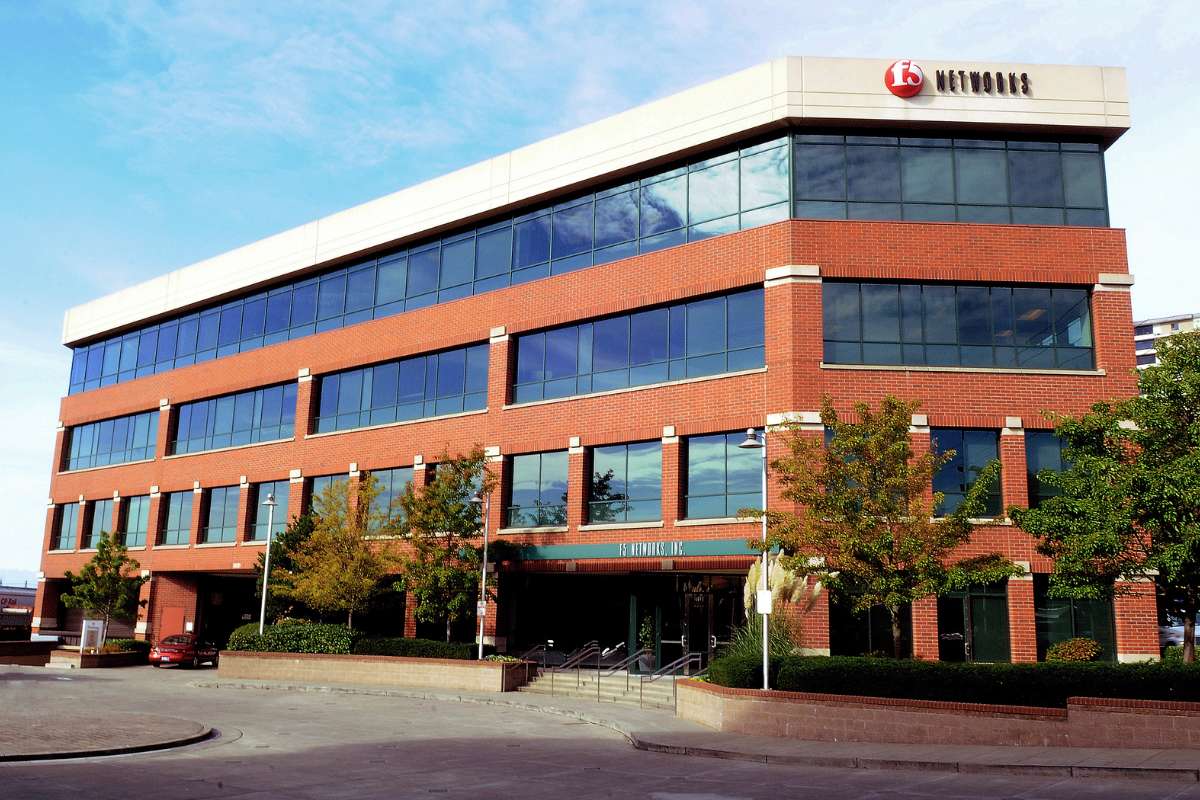
25. F5 Networks
- Founded: 1996
- Main Clients: JPMorgan Chase, Microsoft, CNN
F5 Networks specializes in application security and delivery. They offer robust DDoS protection and load balancing for enterprise cloud environments. The firm ensures applications are highly available, perform well, and remain secure.
Which Industries Need Cybersecurity Firms the Most?
Here’s a rule of thumb: if your company deals with digital space, you need a cybersecurity firm. However, let’s discuss the primary industries that truly require a Cybersecurity Firms services.
1. Financial institutions:
Did you know that financial institutions suffered cybercrime losses totaling approximately $16.6 billion in 2024? Yes, according to an FBI report, they did. According to IBM’s report, financial firms incurred the second-largest breach cost compared to other industries.
2. Healthcare:
For the last 14 years, the healthcare industry has been at the top of the list of most expensive breach recoveries in the world. While 2024 did see a fall of 10.6% in the attacks, it wasn’t exactly good news. The healthcare industry still incurred the loss of $6.08 million in recovering lost data.
3. Government and Defense:
The government and defense sectors worldwide face substantial losses due to cyberattacks. Cybercrime losses affecting government agencies in 2024 exceeded $1.57 billion worldwide, with targeted ransomware attacks causing significant financial and operational damage. The escalating recovery costs average $2.83 million per attack for local and state governments.
4. Small and Medium Businesses (SMEs):
A survey by ENISA (European Union Agency for Cybersecurity) found that 90% of SMEs reported that cybersecurity issues would seriously impact their business within a week. The survey noticed that 57% feared bankruptcy or closure after an attack. In 2024, 88% of SMBs globally experienced cyber incidents, with ransomware and phishing the primary threats. The average recovery costs around $254,445 per attack.
Essential Tools and Technologies Powering Today’s Cybersecurity Firms
When you are assigned to protect a company from digital threats, you need to use the most up-to-date technology. As cybercrimes advance, the protective measures must advance as well.
Here are some technologies these Cybersecurity Firms use to protect you:
1. Artificial Intelligence (AI) and Machine Learning (ML):
These analyze large data sets to detect unusual patterns and predict potential threats automatically.
2. Firewalls and Intrusion Detection/Prevention Systems (IDS/IPS):
Act as barriers and monitors to block unauthorized access and flag suspicious activity.
3. Encryption:
Secures data by encoding it, ensuring only authorized parties can access sensitive information.
4. Endpoint Detection and Response (EDR):
Monitors and protects devices, such as laptops and phones, from malware and attacks.
5. Cloud Security Solutions:
Protect data and applications stored on cloud platforms through identity management, encryption, and threat detection.
6. Identity and Access Management (IAM):
Controls user access to systems based on roles and verifies user identities to prevent unauthorized access.
7. Security Information and Event Management (SIEM):
Collects, analyzes, and correlates security data for real-time monitoring and threat response.
8. Multi-factor Authentication (MFA):
Adds extra verification steps to logins to enhance security.
9. Threat Intelligence Platforms:
Aggregate and analyze information about emerging threats to keep defenses updated.
10. Zero Trust Architecture:
Assumes no one inside or outside the network is trusted; continuously verifies access requests.
11. Automated Incident Response:
Uses orchestration tools to contain and respond to cybersecurity incidents without delay.
Using these technologies, these firms make sure you receive 360-degree protection from all kinds of digital threats. And while this is what they are using currently, these technologies are upgraded frequently, with every new research in the field.
Conclusion
Digital threats are real, and they target the systems we all depend on. To truly protect our essential services and personal data, we need expert help. Partnering with strong cybersecurity firms means you are building a vital shield around your business. This partnership gives people peace of mind, knowing their information is safe.
Ultimately, choosing the right cybersecurity firms is about protecting people and their futures. These partners use the latest technology to defend against cybercrime. They ensure our digital world remains functional and trustworthy. Take the step to secure your organization and, most importantly, the people who rely on it.
FAQs
1. How can I check a firm’s expertise?
Look at their real-world case studies. Check their security certifications. See client reviews for proof of successful work.
2. What training do employees need?
Staff must learn to spot phishing emails. They need training on strong passwords. Regular drills help them respond to threats.
3. How often should my security be tested?
Test your systems often. Do it after major updates. Experts highly recommend Quarterly or monthly checks.