Key Takeaways:
- Microsoft introduced a Microsoft wearable AI badge prototype for office employees.
- The device acts as a reference design for third-party manufacturers.
- Major retail and healthcare corporations will pilot the new technology.
Microsoft Corp. unveiled a wearable artificial intelligence badge concept for office workers at its Build 2026 conference on Wednesday, aiming to bring portable AI agents directly into corporate workflows to assist with daily tasks.
Tech Giant Showcases Concept Devices
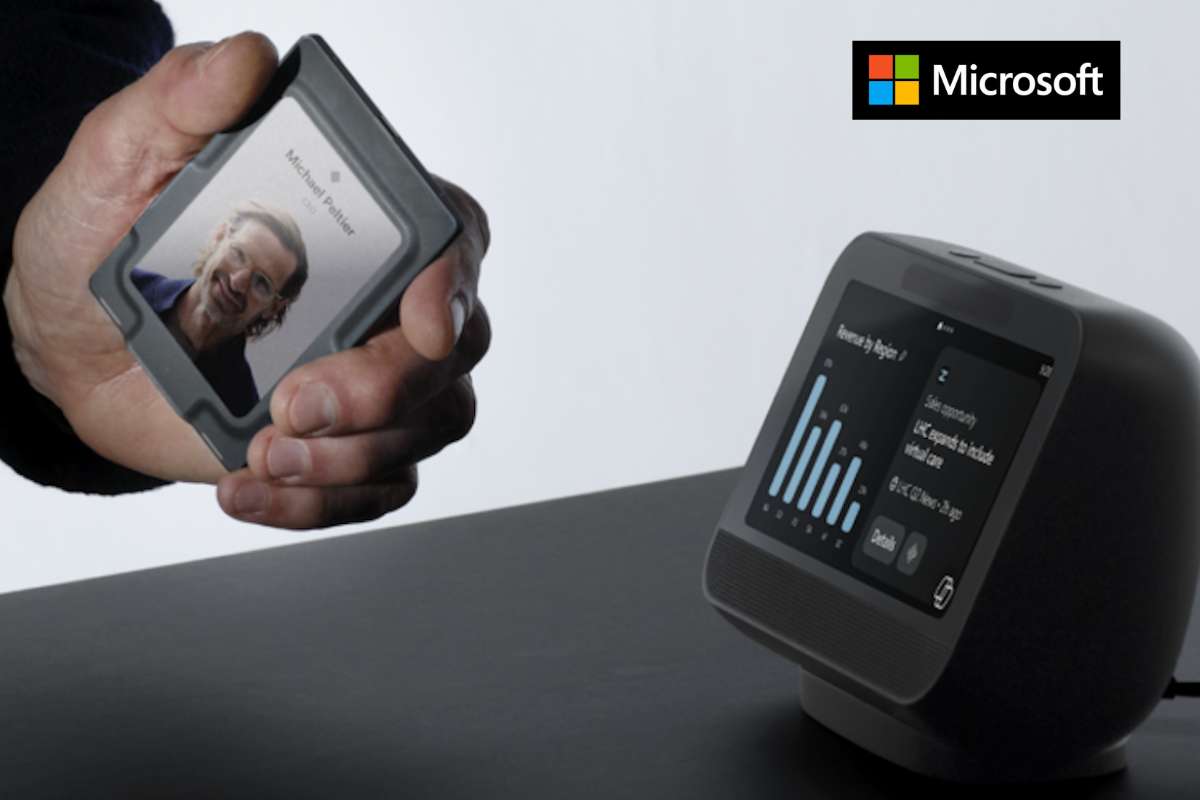
The Redmond, Washington-based company introduced the hardware under Project Solara, describing it as a “chip-to-cloud platform” built for agent-first experiences. The standout prototype is a Microsoft wearable AI badge, roughly the size of a standard corporate access card, which employees can wear on a lanyard or clip to their clothing. The device features a touchscreen, a camera, and a fingerprint scanner to let AI agents interact with the physical workspace.
During a demonstration at the event, Microsoft executive Steven Bathiche activated the badge using its fingerprint scanner and commanded it to photograph the audience.
“The camera lets agents better understand and help take action on the environment around them,” Bathiche stated in a company blog post.
Microsoft also showcased a second concept: a small desk display designed to surface Microsoft 365 data, such as Outlook and Excel files, through voice commands without requiring a traditional computer interface.
Industry Partners Support Reference Designs
Microsoft does not plan to manufacture or sell these specific gadgets to consumers or enterprises. Instead, the company developed them as reference designs to inspire third-party hardware manufacturers.
Tech companies Qualcomm and MediaTek partnered with Microsoft to build the Project Solara prototypes. The platform runs on the Microsoft Device Ecosystem Platform, an enterprise-grade operating system rooted in the Android Open Source Project. This system integrates with existing corporate management infrastructure, allowing IT departments to deploy and secure the gadgets using standard tools like Microsoft Intune and Windows Hello for Business.
Several major corporations have already signed on to test the new technology. AccuWeather, Best Buy, CVS Health, and Target are scheduled to run pilot programs with the Solara hardware to evaluate how portable AI agents can assist employees.
Workplace Wearables Face Privacy Scrutiny
The introduction of the Microsoft wearable AI badge comes amid heightened industry debate regarding privacy, data retention, and consent. A wearable device capable of taking photos, tracking movements, or recording ambient conversations raises immediate compliance and employee privacy concerns within traditional office spaces.
Microsoft has faced hurdles with workplace hardware in the past, notably halting production of its HoloLens augmented-reality headset in 2024 after years of development difficulties. However, company executives view the Microsoft wearable AI badge and this new form factor as a natural evolution for generative AI tools.
“This is a new form factor for computing,” Microsoft Chief Executive Officer Satya Nadella said.
The company has not disclosed potential pricing or release dates for commercial devices based on the Solara platform.
Visit more of our news! CyberPro Magazine