Cybersecurity threats continue to grow as businesses, governments, and individuals depend more on digital systems. Data breaches, ransomware, and identity theft now affect every primary industry, driving strong demand for skilled professionals. Employers across technology, finance, healthcare, and public services are expanding security teams faster than most other tech roles. This has pushed students to closely evaluate the best colleges for cybersecurity, where education focuses on real problems rather than textbook theory.
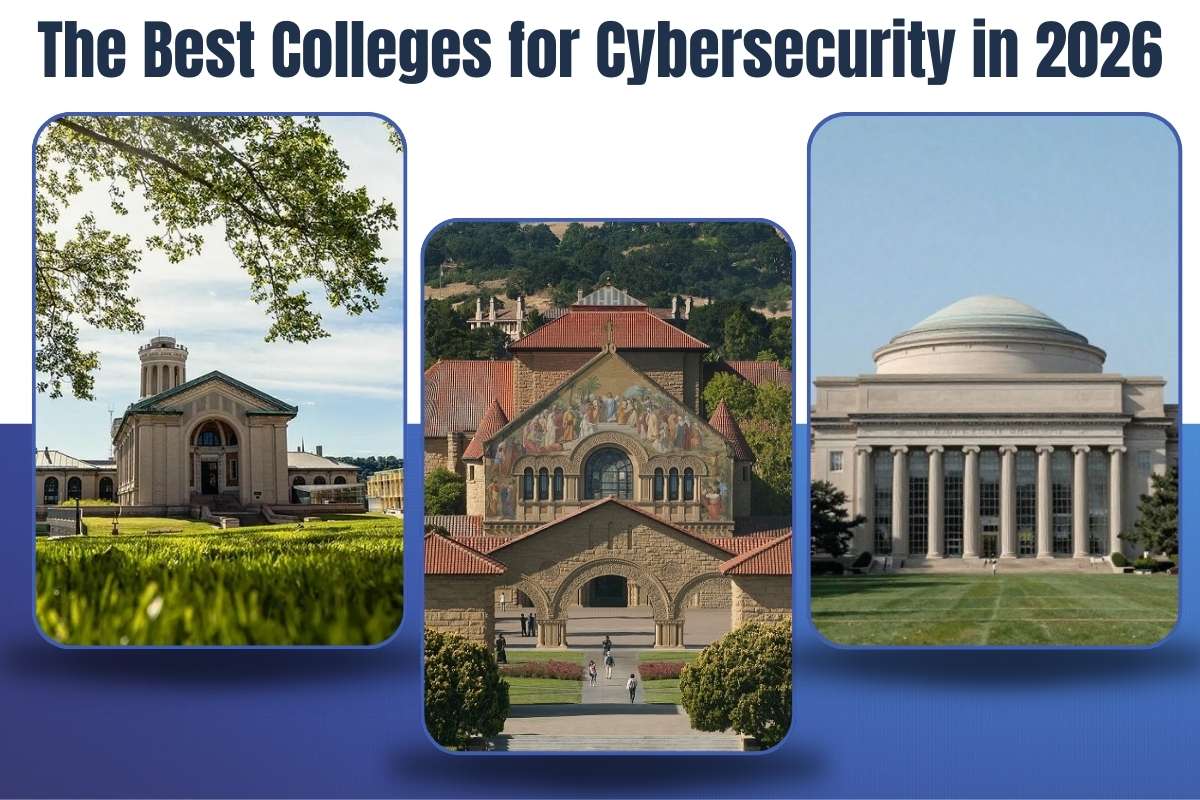
Leading institutions stand out through advanced research, experienced faculty, and close ties with industry and government. Universities such as Carnegie Mellon, Stanford, and MIT invest heavily in security labs, applied research centers, and hands-on training. Students learn to secure networks, analyze threats, and respond to attacks using tools and methods employers currently use. Strong placement outcomes and consistent hiring by major firms highlight the practical value of these programs.
Choosing among the best colleges for cybersecurity involves more than reputation alone. Curriculum depth, lab access, research output, industry partnerships, global exposure, and long-term career results all matter. International universities like ETH Zurich and Imperial College London bring strong research and policy expertise, while several US programs lead in applied learning and job placement. This article explains what to look for in a cybersecurity college, compares the top 10 worldwide, and outlines career paths graduates can expect.
Cybersecurity’s Evolution
Cybersecurity programs are adapting as digital threats become faster, wiser, and harder to predict. One key concern is the long-term impact of quantum computing on encryption standards. Several leading colleges now introduce students to post-quantum security concepts, focusing on how future systems can protect sensitive data once traditional cryptography becomes less reliable.
The rise of AI-enabled attacks has also reshaped how security is taught across the best colleges for cybersecurity. Phishing campaigns now use automation and deepfake techniques, while malware can adjust its behavior to avoid detection. To address this, top institutions train students on advanced threat modeling, anomaly detection, and AI-assisted defense tools. Many programs simulate ransomware ecosystems to help students understand how modern cybercrime operates at scale.
Security models have shifted as well. After high-profile breaches exposed the limits of perimeter defenses, zero-trust architecture has become central to enterprise security. Colleges increasingly teach identity-based access control, cloud security frameworks, and continuous monitoring through hands-on labs.
Programs are also expanding beyond technical skills. Courses now integrate cybersecurity law, ethics, and global compliance, ensuring graduates understand how regulations influence security decisions across industries and regions.
What to Look for in a Cybersecurity College
Cybersecurity programs vary widely, so it helps to focus on a few core factors before applying to the best colleges for cybersecurity. Strong research centers signal that a college invests in advancing security knowledge, not just teaching fundamentals. Institutes such as CyLab or CERIAS support funded research, industry collaboration, and student involvement in solving active security problems.
Industry connections directly affect career outcomes. Colleges with NSA designations or formal partnerships with major technology firms often offer internships, sponsored projects, and on-campus recruiting. Guest lectures from security professionals and collaboration with government agencies add practical context. Consistently high placement rates, often above 95%, show that employers trust these programs.
Hands-on training is just as necessary as coursework. Capture-the-flag competitions, hackathons, and simulated attack labs help students apply concepts under real conditions. Faculty with industry or research backgrounds bring current tools and methods into the classroom. When comparing schools, it also helps to review acceptance rates, graduation outcomes, and alumni career progress to understand long-term value.
| Factor | Why It Counts | Examples from Top Schools |
| Research Centers | Drives innovation | CMU CyLab, Purdue CERIAS |
| Industry Ties | Boosts job access | NSA Centers of Excellence |
| Practical Training | Builds real skills | CTF events, internships |
| Outcomes | Shows program strength | 95%+ placement rates |
Digital Defenders: Ranking the Best Colleges for Cybersecurity Education
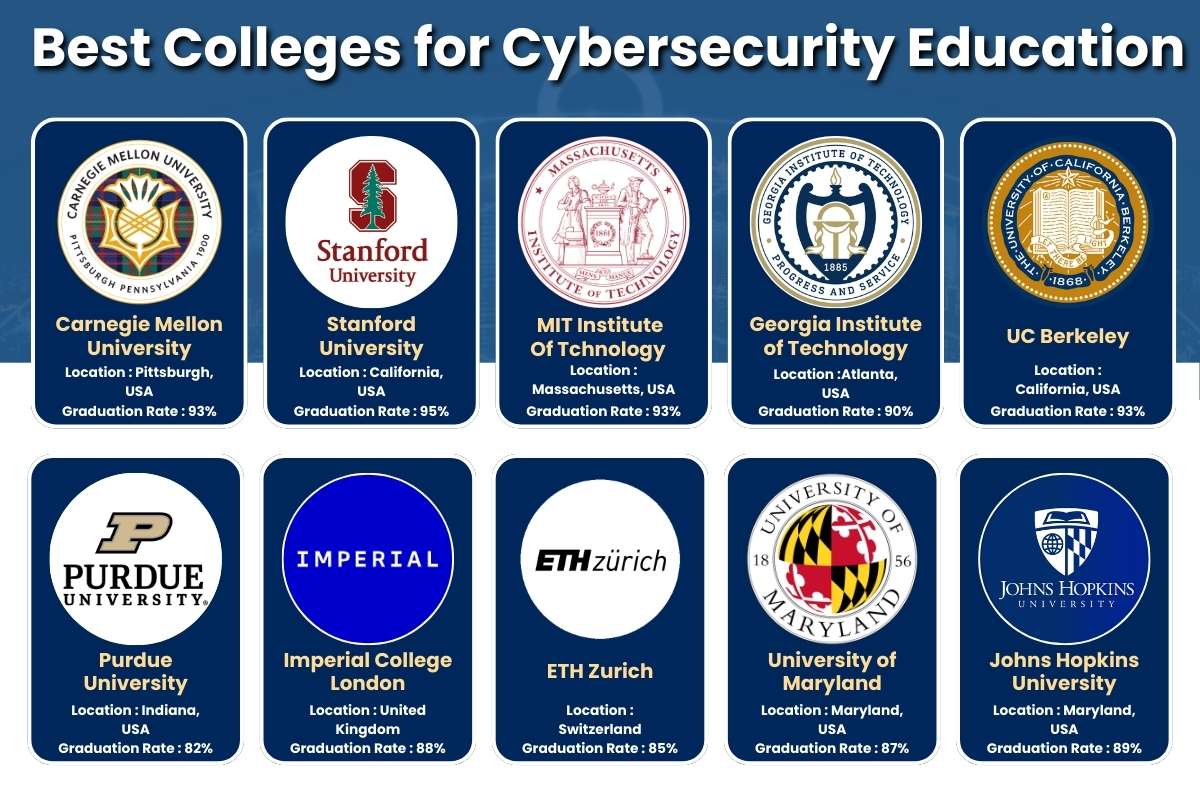
The table below compares the best colleges for cybersecurity based on fees, selectivity, graduation outcomes, and placement success, followed by a detailed breakdown explaining each program’s strengths and career advantages.
| Rank | College | Location | Avg. Fees (per year) | Acceptance Rate | Graduation Rate | Placement Rate | Key Highlight |
| 1 | Carnegie Mellon University | Pittsburgh, USA | $61,000 | 11% | 93% | 98% | CyLab leads privacy research |
| 2 | Stanford University | California, USA | $62,000 | 4% | 95% | 97% | AI security research hub |
| 3 | MIT | Massachusetts, USA | $60,000 | 4% | 94% | 99% | Quantum crypto experts |
| 4 | Georgia Tech | Atlanta, USA | $10,000-$35,000 | 17% | 90% | 96% | Top online MS option |
| 5 | UC Berkeley | California, USA | $45,000 | 11% | 93% | 95% | Secure systems lab |
| 6 | Purdue University | Indiana, USA | $10,000-$29,000 | 52% | 82% | 99% | CERIAS center strength |
| 7 | Imperial College London | UK | $50,000 | 14% | 88% | 92% | Policy and tech ties |
| 8 | ETH Zurich | Switzerland | $1,500 | 27% | 85% | 94% | Blockchain focus |
| 9 | University of Maryland | Maryland, USA | $40,000 | 44% | 87% | 93% | NSA job pipeline |
| 10 | Johns Hopkins University | Maryland, USA | $63,000 | 7% | 89% | 96% | Security institute |
1. Carnegie Mellon University

Key Highlights
- CyLab Security & Privacy Institute with 40+ core faculty
- Top-ranked undergraduate cybersecurity program by US News
- 98% placement rate with average starting salaries above $120,000
- Active partnerships with Microsoft, Google, and US government agencies
Carnegie Mellon sets a high academic and industry benchmark through its CyLab Security & Privacy Institute, which anchors much of the university’s cybersecurity research. Students engage with real security challenges early in their academic journey, contributing to projects that address privacy engineering, intrusion detection, and secure infrastructure. The depth of faculty expertise ensures exposure to both foundational theory and applied research.
Hands-on learning plays a central role, with students participating in advanced labs, capture-the-flag competitions, and sponsored research initiatives. Strong collaboration with federal agencies and private firms creates a steady flow of internships and full-time opportunities. Graduates are consistently hired into high-impact security roles, underscoring CMU’s status as one of the best colleges for cybersecurity.
2. Stanford University

Key Highlights
- Strong integration of AI research into cybersecurity curriculum
- 97% placement rate supported by Silicon Valley hiring networks
- Courses focused on machine learning, cloud security, and threat prediction
- Alumni presence across major technology companies
Stanford’s cybersecurity education is shaped by its leadership in artificial intelligence and software research. Students learn how modern attacks evolve by working with real datasets and security models developed in collaboration with industry partners. Coursework emphasizes predictive defense, secure system design, and the protection of large-scale platforms.
The university’s location amplifies learning beyond the classroom. Guest lectures, internships, and collaborative research projects often involve professionals from nearby technology firms. Stanford graduates benefit from strong alum support and long-term professional connections, which explains consistent hiring outcomes and high salary benchmarks.
Also Read:
- Navigating the Cybersecurity Landscape: The Best Cybersecurity Certifications
- Think Cybersecurity Jobs are Too Hard to Enter? These Roles Prove Otherwise
3. Massachusetts Institute of Technology

Key Highlights
- Global leadership in quantum-resistant cryptography
- 99% placement rate across cybersecurity-related roles
- Interdisciplinary research through CSAIL
- Strong focus on secure systems and applied innovation
MIT approaches cybersecurity through rigorous research and experimentation. Its work in quantum-resistant encryption places students at the forefront of next-generation security challenges. The CSAIL lab connects computer science, engineering, and policy, allowing students to understand how technical defenses align with global standards and regulations.
Undergraduates frequently participate in funded research, building prototypes and testing systems in controlled environments. Employers value MIT graduates for their analytical depth and problem-solving ability, particularly in defense, research, and advanced engineering roles. This academic intensity places MIT firmly within discussions around the best colleges for cybersecurity.
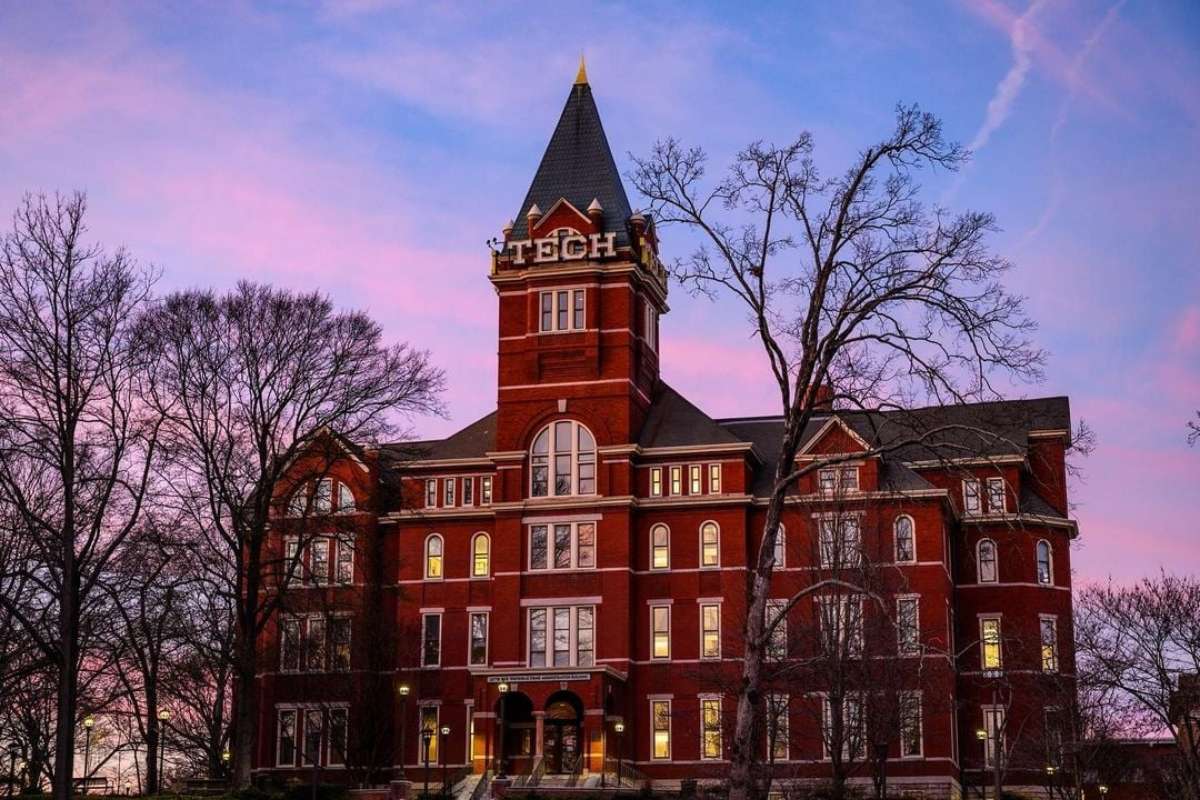
4. Georgia Institute of Technology
Key Highlights
- Highly ranked and affordable online cybersecurity master’s program
- Placement rate around 96 percent
- Strong partnerships through the Industry Research Institute
- Flexible learning options for working professionals
Georgia Tech has built a reputation for delivering strong cybersecurity education without the cost barriers common at private institutions. Its online and on-campus programs focus on cloud security, governance, and risk analysis, using applied group projects linked to industry needs. The curriculum is designed to remain practical and up to date.
Students benefit from collaborations with organizations across aviation, healthcare, and public infrastructure. The program’s flexibility supports professionals balancing work and study, while employers consistently recognize graduates for their applied skills and readiness for operational roles.
5. University of California, Berkeley

Key Highlights
- RISELab research focuses on secure and reliable systems
- 95% placement rate with intense startup exposure
- Emphasis on ethics, compliance, and vulnerability analysis
- Deep alum presence in the technology and innovation sectors
UC Berkeley’s cybersecurity approach centers on building systems that remain secure under real-world conditions. Through RISELab, students work on cloud resilience, distributed systems, and infrastructure reliability. Coursework blends technical depth with case analysis from recent security incidents.
Ethical responsibility and regulatory awareness are embedded in the curriculum, preparing students for roles in which security decisions affect users and organizations alike. Access to the Bay Area technology ecosystem supports internships and long-term career growth, contributing to Berkeley’s recognition as one of the best colleges for cybersecurity.
6. Purdue University

Key Highlights
- CERIAS interdisciplinary center for security research
- 99% placement rate with a strong industry pipeline
- Affordable public tuition with BS and MS pathways
- Lab partnerships with Cisco and IBM
Purdue’s cybersecurity strength is anchored by CERIAS, a long-standing research center that brings together expertise in engineering, computer science, and policy. Students move quickly from theory into applied work, analyzing malware behavior, network vulnerabilities, and system failures in controlled lab environments. The curriculum encourages collaboration across disciplines, reflecting how security problems appear in real organizations.
Industry involvement plays a significant role in training. Lab infrastructure and internships are supported by major technology firms, providing students with exposure to the tools used in enterprise environments. Faculty members often draw from consulting and advisory experience, helping students understand how technical decisions affect broader systems. With high placement outcomes and lower tuition, Purdue regularly appears in discussions around the best colleges for cybersecurity.
7. Imperial College London

Key Highlights
- Strong ties to European cybersecurity policy research
- 92% placement rate with global alums reach
- Curriculum blends technical security and data protection law
- Direct access to finance and government roles in London
Imperial College London approaches cybersecurity through a balance of technical depth and regulatory awareness. Students study secure systems alongside data protection frameworks, preparing them for roles where compliance and engineering intersect. Projects often connect with financial institutions and public agencies, offering firsthand exposure to large-scale security challenges.
Faculty research spans smart infrastructure, urban security, and cross-border data protection. Guest lectures and seminars frequently include experts from international organizations and law enforcement bodies. Graduates benefit from a vast alumni network that supports careers across technology, finance, and public policy, reinforcing Imperial’s global reputation.
8. ETH Zurich

Key Highlights
- Leadership in blockchain and cryptography research
- 94% placement rate with low tuition costs
- Advanced labs focused on decentralized systems
- Strong connections to finance and deep-tech startups
ETH Zurich is known for research-driven cybersecurity education, particularly in cryptography and distributed systems. Students work directly with blockchain frameworks, coding secure ledgers and testing defenses against simulated attacks on decentralized networks. This technical focus is supported by faculty who contribute to international standards and foundational research.
Low tuition attracts a diverse student body, creating collaborative environments that mirror global engineering teams. Graduates move into roles across banking, fintech, and security-focused startups, valued for their ability to handle mathematically complex systems. ETH’s emphasis on fundamentals keeps it relevant as security models evolve.
9. University of Maryland

Key Highlights
- Proximity to the NSA and federal agencies
- 93% placement rate with government-focused pathways
- Cybersecurity programs within the Clark School
- Research strengths in signals intelligence and privacy
The University of Maryland benefits from its location near major federal security organizations. Students gain exposure to government-aligned security practices, including incident response and intelligence analysis. Academic programs emphasize both technical execution and policy awareness, reflecting the needs of public sector employers.
Faculty often advise on national security initiatives, bringing practical insight into the classroom. Graduates frequently enter roles that require security clearances, giving them early access to high-level positions. This alignment between the curriculum and employer needs places Maryland firmly among the best colleges for cybersecurity for students targeting public-sector careers.
10. Johns Hopkins University

Key Highlights
- Information Security Institute with an applied research focus
- 96% placement rate across security-related roles
- Specialized MS options in Security Informatics
- Collaborations with the healthcare and defense sectors
Johns Hopkins emphasizes applied cybersecurity in environments where failure carries serious consequences. Through its Information Security Institute, students work on securing healthcare systems, defense infrastructure, and sensitive data pipelines. Coursework often mirrors real incident scenarios, such as large-scale ransomware attacks, requiring both technical response and strategic decision-making.
Small class sizes encourage close collaboration with faculty, many of whom have experience in national defense research. Partnerships across healthcare and government create targeted career pathways. Graduates leave with the ability to secure complex systems end-to-end, rounding out why Johns Hopkins is consistently referenced when evaluating the best colleges for cybersecurity.
Program Spotlights: What Sets Leaders Apart
Carnegie Mellon’s CyLab brings together more than 40 faculty members working on AI defenses, privacy engineering, and secure systems. Students engage in research early, often contributing to conference papers by their junior year. Partnerships with Microsoft and the Department of Homeland Security provide real datasets for classroom simulations, helping students build job-ready skills through applied problem solving.
Georgia Tech stands out for its large-scale online master’s program, which reaches thousands of learners while maintaining small-group discussions on policy and risk. Industry collaborations in Atlanta, including Delta and the CDC, supply current case studies on cloud security and critical systems. Graduates often credit the flexible structure for enabling career advancement while expanding professional networks.
MIT’s CSAIL lab blends secure coding with robotics and systems engineering, allowing students to prototype defenses for drones, smart grids, and connected devices. Faculty research in quantum security pulls students into funded projects, including international research opportunities, attracting strong interest from Boston-based employers.
Imperial College London contributes a strong policy dimension through EU-funded smart city research. Students examine threats to transport and energy infrastructure, while internships in London’s financial sector combine regulatory frameworks with technical testing. These program strengths explain why such institutions are consistently counted among the best colleges for cybersecurity.
Global vs. US: Strategic Picks
US schools dominate research volume and job pipelines, holding six of the top ten spots. They excel in hands-on labs and corporate ties, with over 90% of placements tied to tech hubs like Silicon Valley and DC. Programs focus on immediate skills for firms like Google or the NSA.
European leaders like Imperial and ETH bring policy depth and low costs. Imperial stresses GDPR compliance and cross-border threats, while ETH leads in blockchain math at just $1,500 a year. Both rank high on citations but prioritize ethics over speed-to-job.
| Aspect | US Strengths | Europe Strengths |
| Research Focus | Applied labs, AI/quantum | Policy, crypto theory |
| Costs | $10K-$62K, online options | $1.5K-$50K, global access |
| Jobs | 95%+ placement, FAANG/NSA | 90%+, finance/Interpol |
| Student Fit | Tech careers, internships | Regulations, research abroad |
How to Choose the Right College for You
Start by aligning your budget with program costs and long-term return. Public universities such as Georgia Tech and Purdue offer substantial value, combining lower tuition with solid placement outcomes. Compare total expenses against typical starting salaries, which often exceed $110,000, to understand how quickly graduates recover their investment.
Location can influence both learning experience and career access. Universities near Washington, DC, such as the University of Maryland, benefit from close ties to federal agencies and government contractors. Schools in the Bay Area, including UC Berkeley, connect students to startup ecosystems and established technology firms. For those balancing work or distance, online and hybrid formats provide flexibility without sacrificing academic depth.
Degree level and specialization also help narrow choices. Bachelor’s programs suit students building technical foundations, while master’s degrees work well for professionals shifting into security roles or advancing their careers. Engage with alums on professional networks, attend virtual information sessions, and compare program structures before deciding.
Quick decision tips:
- Budget-focused: Public universities with financial aid options
- Research-driven: Programs centered on advanced labs and funded projects
- Career-oriented: Schools with strong government or industry hiring pipelines
Career Paths After a Cybersecurity Degree
A cybersecurity degree can lead to multiple career tracks, depending on technical focus, experience level, and industry preferences. Below is a clear breakdown of typical roles, salary ranges, and progression paths.
1. Entry to Mid-Level Roles
→ Cybersecurity Analyst
- Average Salary: ~$110,000
- Core Responsibilities: Monitoring systems, analyzing threats, responding to incidents, ensuring compliance
- Key Skills: Network security, SIEM tools, risk assessment, incident response
- Common Employers: Banks, cloud providers, healthcare organizations, government agencies
This role often serves as a starting point, helping professionals gain hands-on experience in real security operations.
2. Specialized Technical Roles
→ Ethical Hacker / Penetration Tester
- Average Salary: ~$130,000
- Core Responsibilities: Simulating attacks, identifying vulnerabilities, testing defenses
- Key Skills: Penetration testing tools, scripting, exploit analysis, security auditing
- Common Employers: Technology firms, consulting companies, financial institutions
These roles suit professionals who focus on offensive security and advanced technical testing.
3. Leadership and Executive Track
→ Security Architect / CISO Path
- Average Salary: $200,000+
- Core Responsibilities: Defining security strategy, managing teams, overseeing governance and risk
- Key Skills: Security architecture, policy design, leadership, regulatory knowledge
- Common Employers: Large enterprises, cloud providers, government contractors
This path typically follows years of technical and managerial experience.
4. High-Growth Hiring Sectors
- Finance and banking
- Government and defense
- Cloud service providers
- Healthcare and critical infrastructure
Career progression typically moves from analyst to specialist, then to senior or leadership roles, with each stage requiring broader responsibility and more profound expertise.
Also Read: Best Cybersecurity Training Online Courses That Employers Will Notice
Conclusion
The best colleges for cybersecurity, including Carnegie Mellon, Stanford, and MIT, prepare students with skills that employers actively seek. Public universities such as Purdue and Georgia Tech, along with global institutions like ETH Zurich, deliver strong placement outcomes and competitive starting salaries, often around $110,000 or higher. Graduates enter a field with steady demand and meaningful roles across industries.
What separates these colleges is their focus on advanced research, close industry collaboration, and applied training. Internships, capture-the-flag competitions, and long-term alum networks provide students with practical experience that continues to support career growth well after graduation.
FAQs
1. Are the best colleges for cybersecurity worth it?
Yes, graduates from the best colleges for cybersecurity often secure high-paying roles in tech, finance, healthcare, and government sectors.
2. Can I study cybersecurity online?
Yes, reputable programs like Georgia Institute of Technology offer respected online cybersecurity master’s degrees with flexible options.
3. Why choose the best colleges for cybersecurity?
The best colleges for cybersecurity offer advanced labs, industry partnerships, and 95%+ placement rates with competitive starting salaries.