Digital threats explode daily. Ransomware strikes every 11 seconds, AI phishing evades filters, and supply chain breaches expose millions. The global cybersecurity market hit $213 billion in 2025, racing toward $309 billion by 2029 (10.6% CAGR), driven by 30,000+ new vulnerabilities yearly and a 3.5 million job talent crisis.
Organizations face stark choices: automate solutions for cybersecurity or risk catastrophe. Small businesses and Fortune 500s alike discover that proper defenses turn breaches from existential threats into manageable incidents.
This guide reveals which solutions for cybersecurity actually work, prioritized by organizational needs, with budget-conscious implementation strategies that deliver real protection.
What are Cybersecurity Solutions and Why Do They Matter?
Cybersecurity solutions represent integrated products, services, and systems that shield computer systems, networks, and sensitive information against unauthorized access, harm, or theft. They combine people, processes, and technology to prevent, detect, and respond to cyber threats, ensuring digital assets remain secure while business operations continue uninterrupted.
The importance of solutions for cybersecurity extends beyond preventing breaches. Consider the real costs:
1. Keeping Digital Assets Safe:
Cyberattacks grow more sophisticated annually. In 2025, ransomware, phishing, insider threats, and advanced persistent threats pose constant danger, with 43% of breaches originating from insider threats and 80% from compromised credentials. Without proper cybersecurity solutions, organizations operate with zero visibility into threats already present on their networks.
2. Ensuring Business Continuity:
A single breach causes operational downtime, financial loss, and reputation destruction. Cybersecurity solutions limit breach damage, accelerate recovery, and maintain customer trust. Recovery time without backup solutions averaged 30+ days in 2025; with immutable backups, recovery drops to 1-3 days. That difference equals millions in prevented losses.
3. Meeting Regulatory Mandates:
GDPR imposes fines reaching 20 million euros or 4% of annual revenue. HIPAA requires healthcare data encryption under penalty of $100-$50,000 per record. PCI DSS mandates credit card data protection. Cybersecurity solutions provide the controls that prove regulatory compliance or expose organizations to devastating financial penalties.
4. Reducing Attack Surface:
Cloud adoption, IoT proliferation, and hybrid work models exponentially expand attack surfaces. Legacy security perimeters no longer exist. Modern cybersecurity solutions protect cloud assets, remote endpoints, and interconnected devices simultaneously, something traditional tools cannot accomplish.
Core Components of Effective Solutions for Cybersecurity

Comprehensive cybersecurity solutions integrate multiple protective layers rather than relying on single tools. The most effective programs include:
1. Network Security:
Firewalls, intrusion detection/prevention, and network segmentation ensure traffic integrity and block malicious connections before they reach internal systems.
2. Endpoint Protection:
EDR (Endpoint Detection and Response) and antivirus platforms protect laptops, desktops, and mobile devices from malware execution and exploit attempts that represent 85% of breach entry points.
Also Read: Safeguard Your Digital Assets: Comprehensive Cyber Security Services Explained
3. Data Protection:
Data Loss Prevention (DLP), encryption at rest and in transit, and backup systems safeguard sensitive information, the ultimate target of most attackers.
4. Identity & Access Management:
MFA (Multi-Factor Authentication), SSO (Single Sign-On), and least-privilege access controls prevent credential-based attacks that drive 80% of breaches globally.
5. Cloud Security:
CSPM (Cloud Security Posture Management) and CWPP (Cloud Workload Protection) identify misconfigurations and threats in AWS, Azure, and Google Cloud environments before exploitation.
6. Threat Visibility:
SIEM (Security Information and Event Management) and XDR (Extended Detection and Response) aggregate logs and detect breach activity across all systems simultaneously.
7. Security Awareness:
Employee training programs combat phishing, social engineering, and insider threats by transforming users from vulnerability into frontline defense.
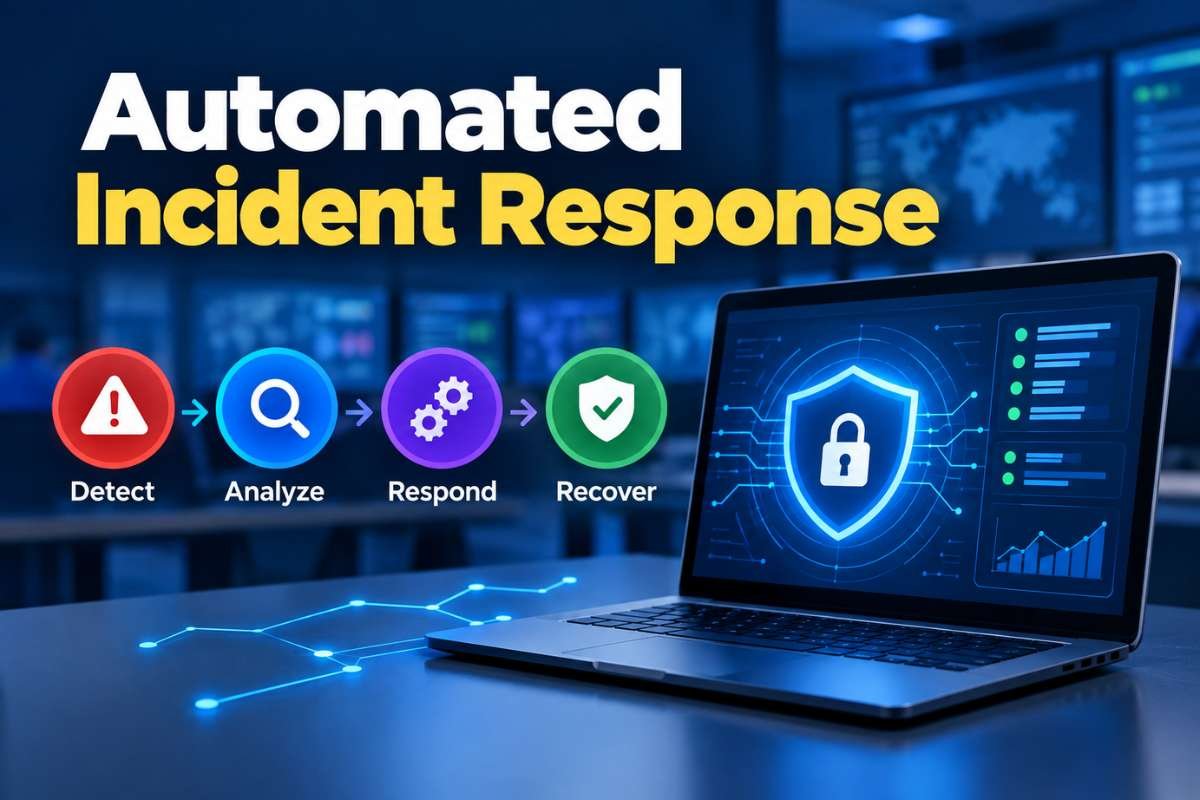
8. Incident Response:
Formal procedures for identifying, containing, and remediating breaches determine whether incidents cause isolated damage or enterprise-wide compromise.
Each component reinforces others, removing any that creates blind spots that attackers exploit. The most mature organizations implement all eight categories in integrated configurations.
Types of Solutions for Cybersecurity: Where Each Protects
The solutions for the cybersecurity terrain span specialized categories, each addressing specific threats and environments:
| Solution Category | Primary Purpose | Typical Risks Addressed | Best For |
| Network Security | Protect network traffic | External attacks, DDoS, malicious protocols | All organizations |
| Endpoint Security | Protect individual devices | Malware, ransomware, unauthorized access | Distributed/remote workforces |
| Cloud Security | Protect cloud environments | Misconfigurations, data leakage, unauthorized access | Cloud-first businesses |
| Data Security | Protect information assets | Data theft, unauthorized access, loss | Regulated industries |
| Identity & Access | Control user access | Credential compromise, privilege abuse | All organizations |
| Application Security | Protect software systems | Vulnerabilities, exploits, API attacks | Custom app development |
| IoT Security | Protect connected devices | Firmware vulnerabilities, device compromise | Manufacturing, healthcare |
| Supply Chain Security | Protect against vendor risks | Third-party breaches, compromised software | Large enterprises |
Understanding where threats originate in your environment—network traffic? Endpoints? Cloud applications? Vendors?—determines which solutions for cybersecurity deserve investment priority.
1. Network Security Solutions
Network security solutions form the perimeter defense that examines traffic before it reaches internal systems. Next-generation firewalls (NGFW) inspect application-level traffic and block sophisticated exploits; traditional firewalls only examine IP addresses and ports. Intrusion Detection Systems (IDS) monitor traffic passively and alert analysts; Intrusion Prevention Systems (IPS) automatically block threats.
Web Application Firewalls (WAF) specifically defend APIs and web-facing applications against OWASP Top 10 vulnerabilities like SQL injection, cross-site scripting, and DDoS attacks. Imperva’s WAF customers report 111% increases in DDoS attacks mitigated while blocking application-level exploits.
These solutions for cybersecurity work best when deployed as part of a layered defense. A firewall alone stops external attack vectors; endpoint protection catches malware that slips through; SIEM correlates alerts across systems to reveal coordinated attacks. Each layer compensates for the others’ limitations.
2. Endpoint Security Solutions
Endpoints like laptops, desktops, and mobile devices represent invasion points in 85% of breaches. Modern endpoint security has evolved from basic antivirus toward intelligent platforms that detect sophisticated threat signatures missed.
Endpoint Protection Platforms (EPP) combine signatures, behavioral analysis, and machine learning to catch known malware and suspicious activity patterns simultaneously. Endpoint Detection & Response (EDR) goes further, recording every process execution, enabling security teams to replay attacker actions forensically and understand exact compromise timelines. EDR detects threats 19 days faster than legacy antivirus on average.
Extended Detection & Response (XDR) expands EDR visibility across endpoints, networks, and cloud systems, using AI to correlate suspicious events across layers that individual tools might miss.
For organizations with security teams managing these tools, EDR/XDR represent the cybersecurity solutions that deliver the most threat detection improvement per dollar invested. For those lacking security expertise, Managed Detection & Response (MDR) provides 24/7 outsourced monitoring and response capabilities.
3. Data Security Solutions
Data remains the ultimate prize attackers pursue—customer information, financial records, intellectual property, and personal identifiable information. Data security solutions for cybersecurity address data across its entire lifecycle.
Data Loss Prevention (DLP) platforms discover sensitive information across all systems, then prevent unauthorized transmission. Context-aware DLP understands that sharing certain data with finance teams represents a legitimate business function, while identical sharing to external emails triggers automatic blocking.
Encryption protects data at rest (stored on disks) and in transit (moving across networks). Modern solutions automatically manage encryption keys, ensuring key compromise doesn’t expose historical data.
Backup and Disaster Recovery solutions for cybersecurity maintain immutable copies; attackers cannot encrypt or delete these backups even with administrative access. This capability alone prevents ransom payment in many organizations. Recovery time without backup averages 30+ days and costs millions; with backup, recovery takes 1-3 days at a fraction of the cost.
Database Activity Monitoring (DAM) records every query on sensitive databases, enabling alerts when unauthorized access occurs.
4. Identity & Access Management Solutions
Compromised credentials drive 80% of breaches, making solutions for cybersecurity in this category foundational. Modern IAM combines multiple protective mechanisms:
Multi-Factor Authentication (MFA) requires authentication through multiple independent channels, something you know (password), something you have (phone), something you are (biometric). MFA defeats credential-based attacks even when passwords are compromised.
Single Sign-On (SSO) eliminates password proliferation by centralizing authentication. Users authenticate once; applications trust the SSO provider, reducing credential distribution and reuse risk.
Privileged Access Management (PAM) isolates administrative credentials in vaults, restricting access through approval workflows and logging all usage comprehensively.
Conditional Access implements Zero Trust principles, continuously re-evaluating user context (location, device, time) and granting or denying access based on real-time risk signals.
Identity Governance automates lifecycle management: provisioning access when employees join, deprovisioning when they depart, and reviewing permissions quarterly to ensure least-privilege adherence.
Organizations with robust IAM reduce breach probability by 50%+ and contain damage severity when breaches occur, as unauthorized lateral movement faces immediate friction.
The 2026 Threat Landscape: Why Solutions for Cybersecurity Became Non-Negotiable
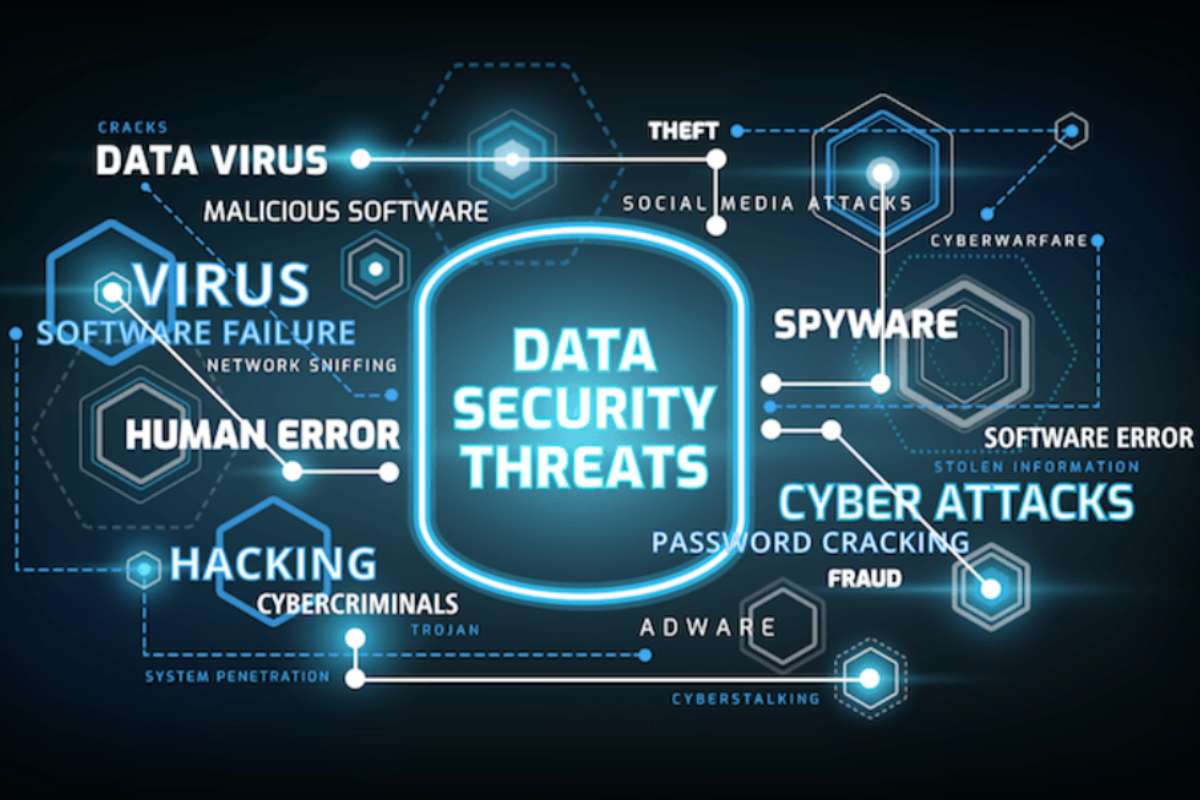
The breach statistics for 2025 paint a sobering picture for 2026. AT&T suffered the largest telecommunications breach ever; 31 million customer records were exposed. Google’s systems experienced multi-week undetected breaches through Salesforce-hosted platforms. Ascension Healthcare’s compromise of 437,000 patient records originated through a third-party vendor with outdated software. A credential dump containing 16 billion credentials circulated globally, combining data from infostealer malware infections.
These incidents share a critical pattern: cybersecurity solutions failed at foundational levels. Vendor security gaps enabled the Ascension breach. Supply chain vulnerabilities opened Google’s defenses. Credential reuse from infected devices compromised accounts across platforms.
Beyond volume, attack sophistication evolved dramatically. AI-generated phishing emails defeat signature-based filters through contextual personalization. Deepfake videos impersonate executives, authorizing fraudulent wire transfers; recent incidents involved $25.6 million deepfake scams. AI-crafted malware mutates faster than signature databases update, defeating traditional antivirus approaches.
Yet defenders weaponize AI similarly. AI-driven threat detection identifies patterns humans miss. Automated incident response isolates compromised devices in seconds. Behavioral analytics detect anomalies that traditional monitoring overlooks. The organizations winning against modern threats leverage cybersecurity solutions that combine human expertise with automated detection and response, because the attack volume and sophistication exceed human analyst capacity.
Also Read: Are Your Files Really Safe? The Hidden Cloud Security Threats You Shouldn’t Ignore
How to Choose the Right Solutions for Cybersecurity?
Selecting appropriate cybersecurity solutions demands systematic evaluation beyond vendor marketing enthusiasm.
Step 1: Identify Your Critical Assets
What data, systems, or services generate maximum business value? Protect these first. Customer databases demand different security than general email systems. Financial records require different controls than marketing materials. Asset prioritization ensures limited security budgets protect the highest-impact targets first.
Step 2: Document Regulatory Requirements
GDPR mandates encryption and data protection controls. HIPAA requires healthcare-specific safeguards. PCI DSS enforces credit card data protection. ISO 27001 demands information security management systems. Cybersecurity solutions must satisfy these requirements or expose organizations to massive fines.
Step 3: Evaluate Integration and Scalability
Solutions must work within existing infrastructure and grow as the business expands. Consolidated platforms from single vendors (Palo Alto Networks, CrowdStrike, Fortinet) simplify integration but risk vendor lock-in. Best-of-breed point solutions excel in specific domains but multiply integration complexity. Gartner’s 2025 forecast shows 70% of enterprises choosing consolidated platforms; 30% maintaining best-of-breed approaches.
Step 4: Prioritize Automation and AI
The talent crisis makes automation essential. AI-powered threat detection identifies patterns humans miss. Automated response limits dwell time, the duration between compromise and detection. Organizations with automation reduce response time by 60% compared to manual-only approaches.
Step 5: Demand Integrated Consoles
Multiple disconnected security tools create blind spots where attacks hide. Consolidated solutions offer unified visibility, simplified control, and comprehensive threat correlation across layers.
Step 6: Test before Full Deployment
Penetration testing and security assessments validate that solutions for cybersecurity actually defend against real attacks, not theoretical threats. Many organizations discover their deployed solutions have significant blind spots only through rigorous testing.
Organizations should honestly assess internal security maturity. Immature programs benefit most from cybersecurity solutions, emphasizing ease-of-use and automation; sophisticated tools requiring expert management provide little value to teams lacking expertise. Mature programs can leverage specialized point solutions in specific domains where ROI justifies complexity.
Building a Practical Implementation Plan

Rather than attempting simultaneous deployment across all cybersecurity solutions categories, staged implementation reduces disruption and allows team learning.
Phase 1: Foundation (Months 1-3)
Deploy MFA on all critical applications, implement endpoint EDR, establish email security, enable cloud backup, and conduct security awareness training. Investment: $30K-$50K. Risk reduction: 50-60%.
This foundation addresses the threat vectors causing 80% of breaches. MFA stops 99.9% of credential attacks. Endpoint EDR detects malware that email filters miss. Cloud backup enables recovery without ransom payment. Email security blocks most phishing.
Phase 2: Visibility (Months 4-6)
Deploy SIEM for threat detection, implement a network firewall if missing, begin vulnerability scanning, and establish incident response procedures. Investment: $50K-$100K. Risk reduction: +10-15%.
SIEM correlates alerts from multiple sources, revealing coordinated attacks. Vulnerability scanning identifies exploitable weaknesses before attackers discover them. Documented incident procedures ensure team coordination during breaches.
Phase 3: Control Deepening (Months 7-9)
Implement data loss prevention, deploy privileged access management, establish a vulnerability management program, and begin a Zero Trust pilot. Investment: $75K-$150K. Risk reduction: +10-15%.
These controls address attacks targeting data and administrative accounts; vectors that early-phase solutions didn’t fully address.
Phase 4: Optimization (Months 10-12)
Expand Zero Trust enterprise-wide, implement automation (SOAR) for incident response, and conduct a full security assessment. Investment: $75K-$200K. Risk reduction: +10-15%.
End-of-year results: Total investment $230K-$500; total risk reduction 75-85%; measurable improvement with MTTD <48 hours and MTTR <4 hours.
Real-World Impact: Case Studies Demonstrating Solutions for Cybersecurity ROI
1. Change Healthcare Ransomware (Vendor/Third-Party Breach) – $1.5B+ Impact Avoided with Proper Controls
Change Healthcare (a UnitedHealth Group subsidiary, processing 15B healthcare transactions annually) suffered a massive ransomware attack in February 2024 via inadequate remote access authentication on a critical application. Attackers (ALPHV/BlackCat) gained initial access, moved laterally for 9 days undetected, exfiltrated 6TB of sensitive patient data, and deployed ransomware, disrupting claims processing nationwide.
- What Failed: No multi-factor authentication (MFA) on remote access; weak threat detection allowed a 9-day dwell time.
Recovery Cost: $1.5B+ (ransom payment, system restoration, operational disruption, legal liabilities). - Lesson: Organizations with network segmentation + EDR detect lateral movement within hours vs. days/weeks. MFA on remote access alone would have prevented initial compromise (stops 99.9% of account attacks).
2. Capital One AWS Misconfiguration Breach – 100M+ Records Exposed, CSPM/WAF Could Have Prevented
Capital One (2019) suffered one of the largest cloud breaches when a misconfigured web application firewall (WAF) exposed an IAM role with excessive S3 bucket permissions, allowing a former AWS employee to exfiltrate 100M+ customer records (credit scores, SSNs, bank details) via Server-Side Request Forgery (SSRF).
- What Failed: Over-permissive IAM roles + WAF misconfiguration enabled broad S3 access; monitoring failed to flag anomalous API calls as they mimicked legitimate traffic.
- Impact: $80M+ remediation, regulatory scrutiny, reputational damage.
Solution Proven: Cloud Security Posture Management (CSPM) scans IAM policies and S3 configurations daily; WAF blocks SSRF attempts. Capital One implemented these post-breach, preventing recurrence. Single misconfiguration breach costs average $4.45M; CSPM reduces risk 70%+. - ROI: Post-breach CSPM/WAF deployment protected against repeat incidents costing $500K+ each.
3. Norsk Hydro Ransomware – $70M Recovery without Paying Ransom via Backups/EDR
Norsk Hydro (global aluminum manufacturer) faced LockerGoga ransomware in March 2019 that encrypted 3,000+ servers across 40 countries, halting production. Attackers demanded a bitcoin ransom via email.
- What Worked: Refused ransom payment; relied on immutable backups for recovery, and endpoint detection identified Trojan entry vector (phishing email). Microsoft DART assisted restoration from backups.
- Recovery Cost: $70M (downtime, manual processes) – avoided paying ransom that averages $1.5M+ with no data recovery guarantee.
- ROI: Share price remained stable (few companies achieve this post-ransomware); proved “no ransom” policy viable with proper backups/EDR. Modern EDR stops ransomware encryption in minutes vs. Hydro’s hours.
Key Solutions:
- Immutable backups enabled full restoration without paying
- EDR behavioral detection traced the initial phishing compromise
- Incident response plan coordinated global recovery
FAQs
Q: Which solutions for cybersecurity matter most?
Prioritize by impact: MFA (stops 99.9% of credential attacks), endpoint EDR (detects malware), email security (blocks phishing), cloud backup (enables recovery), firewall (blocks external attacks). These five address 80% of breach vectors.
Q: How much should our organization spend on cybersecurity?
Industry benchmarks recommend 3-5% of IT budget for small business ($10-$50K/year); 5-10% for mid-market ($100K-$500K); 8-15% for enterprise ($2M-$10M+). Single breach costs ($5.13M average) far exceed annual security investment, making proper solutions for cybersecurity high-ROI defensive spending.
Q: Can cybersecurity solutions prevent all breaches?
No. Technology reduces breach probability by 50-70%, limits damage when breaches occur, and accelerates recovery—but guarantees nothing. Risk acceptance remains part of any mature security program.
Q: Should we implement Zero Trust now?
Start now; phase over 2-3 years. Immediate deployment of MFA + conditional access costs moderate amounts. Micro-segmentation + full enforcement expands investments across 24-36 months. Result: 40% reduction in mean time to detect within 6 months.