A single wrong click can result in the leakage of thousands of customer records. A single lost laptop can cost a company millions. It can also lead to lawsuits and loss of trust. In 2024, the average cost of a data breach to global companies was $4.88 million, and for U.S. companies, it was over $10 million.
This is why protecting your data is important.
So, what is data loss prevention? It is a practice that enables companies to prevent sensitive data from being lost, leaked, or stolen. It safeguards data from both external threats and internal errors.
In simpler terms, it ensures that your personal information does not fall into unauthorized hands.
What is Data Loss Prevention?
Data Loss Prevention (DLP) is a data security approach. It identifies, monitors, and prevents unauthorized access, sharing, or transfer of sensitive data. Organizations use it to minimize the risks of data breaches, regulatory penalties, and data leakage.
Most of these incidents are due to human error. Such as sending sensitive files to the wrong person, uploading data to cloud storage, or losing company devices. DLP eliminates these risks by providing organizations with visibility and control over sensitive data usage and sharing.
A standard DLP solution consists of:
- Data discovery to identify sensitive data.
- Data classification to identify PII, financial data, intellectual property, and confidential business data.
- User activity monitoring to monitor risky behavior.
- Policy enforcement to prevent unauthorized transfers.
- Access control and encryption to secure data in transit and at rest.
What Exactly Does Data Loss Prevention Protect?
Understanding what is data loss prevention helps organizations see why it matters. DLP solutions support regulatory compliance, risk management, and overall information security by preventing unauthorized data transfers. They protect high-risk and regulated data, including:
- Personally Identifiable Information (PII)
- Financial data
- Credit card data
- Employee data
- Intellectual property
- Protected Health Information (PHI)
How Data Loss Prevention Stops Costly Data Breaches Before They Happen?
DLP systems protect information in three key states. To fully grasp what is data loss prevention, you must know how it protects data at rest, in motion, and in use. Understanding these helps explain how they work in real environments:
1. Data at Rest
This is data stored on servers, databases, laptops, or in cloud storage. DLP scans these storage locations to find sensitive content such as PII, financial records, or intellectual property. It applies protections like access controls, encryption, or policy rules to prevent unauthorized access.
2. Data in Motion
This refers to data moving across networks. For example, via email, file transfers, or web uploads. DLP inspects this traffic in real time to detect and block sensitive information from leaving the organization.
3. Data in Use
Users actively access or manipulate the data. DLP monitors actions such as copying to USB devices, printing documents, or pasting into other applications. It blocks or alerts the security team whenever users handle sensitive data in ways that violate policy.
In practice, DLP combines content inspection, such as pattern matching for credit card numbers or tax IDs, with contextual analysis, including user identity, destination, and file type. It then allows, blocks, or logs the action based on the analysis.
You may also like: Data Privacy and Cyber Crime: An Inescapable Entanglement in the Digital Era
What are the Most Effective Data Loss Prevention Solutions?

Protecting sensitive information starts with knowing what is data loss prevention and its types. Each type plays a unique role in keeping your data safe.
Most organizations implement a combination of DLP strategies to cover all possible entry points and storage locations for sensitive data.
1. Network DLP:
Network DLP monitors data as it moves across your organization’s systems and networks. It scans emails, file transfers, and web traffic. This prevents confidential information from leaving the company without authorization. Popular tools for network DLP include Forcepoint DLP and Symantec Data Loss Prevention. They provide real-time monitoring and policy enforcement.
2. Endpoint DLP:
Endpoint solutions protect laptops, desktops, and mobile devices. They control how users handle sensitive files. For example, copying to USB drives, printing, or uploading to unauthorized sites is restricted. It ensures that even if data leaves the network physically, it stays under control. Tools like McAfee Total Protection for Data and Digital Guardian offer robust endpoint monitoring and blocking capabilities.
3. Cloud DLP:
With the rise of cloud platforms and SaaS applications, securing cloud-stored data is critical. Cloud DLP monitors storage and access in services like Google Workspace, Microsoft 365, and Dropbox. It detects misconfigurations, unauthorized sharing, and risky user behavior that could expose sensitive information. Leading solutions include Microsoft Purview Data Loss Prevention and Symantec Cloud DLP, which enforce consistent policies across cloud environments.
Using all three types of DLP creates a layered defense. This approach reduces blind spots, covers devices and platforms, and strengthens protection against accidental or malicious data loss.
The Critical Benefits of Implementing Data Loss Prevention
Data breaches can devastate any organization. In the healthcare industry, hackers and IT errors exposed nearly 249.09 million patient records between 2005 and 2019. Of these, 157 million records were compromised in the last five years. The average cost of a healthcare data breach reaches USD 6.45 million, far above the global average.
Understanding what is data loss prevention is essential to avoid such costly mistakes. This is where DLP comes in handy.
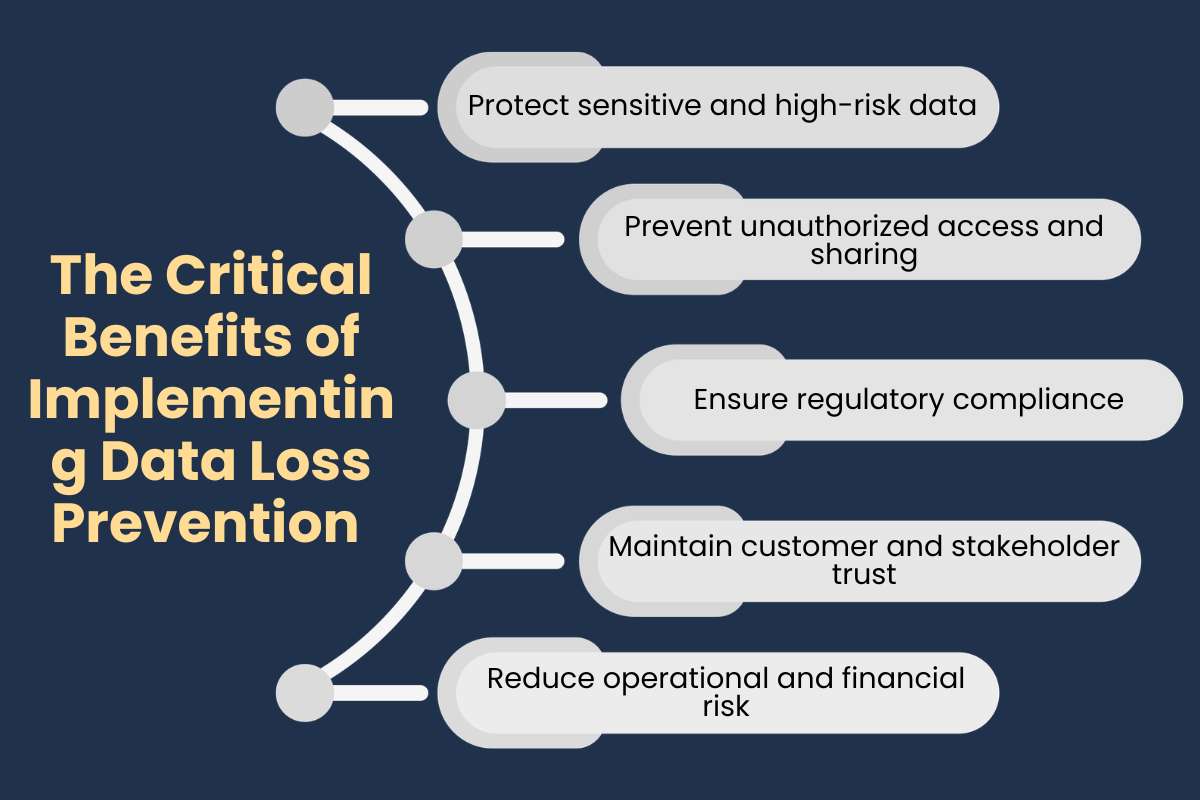
The key benefits of implementing DLP include:
- Protect sensitive and high-risk data: It continuously identifies and classifies data such as Protected Health Information (PHI), financial records, and intellectual property.
- Prevent unauthorized access and sharing: It monitors actions like emailing, copying to external drives, or uploading to cloud services and blocks risky activity.
- Ensure regulatory compliance: DLP supports compliance with laws and standards such as HIPAA, GDPR, and PCI-DSS, reducing the risk of fines and legal action.
- Maintain customer and stakeholder trust: By safeguarding sensitive data, DLP prevents breaches that can damage reputation.
- Reduce operational and financial risk: DLP minimizes the cost of data breaches by stopping leaks before they escalate and protecting critical business information.
How to Build a Data Loss Prevention Strategy that Actually Works?
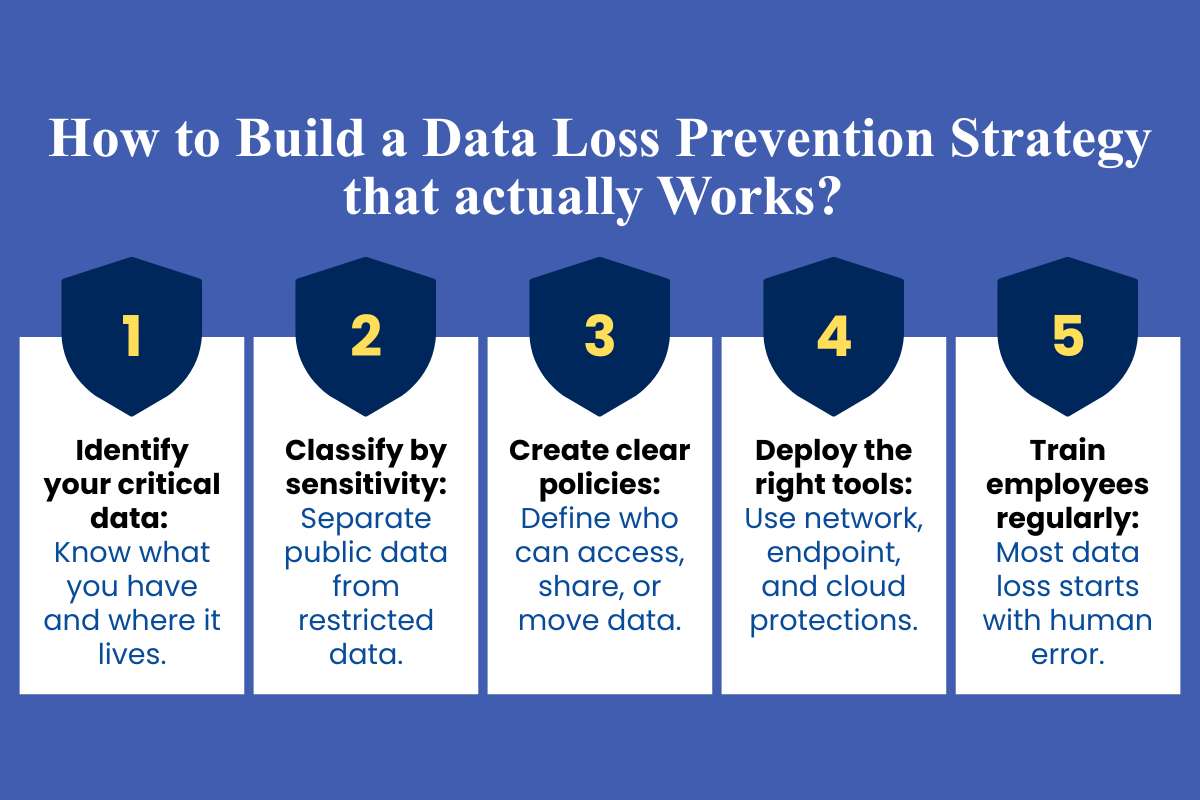
Many organizations purchase tools without developing a strategy. But technology is not the answer. Once you understand what is data loss prevention, you can build a strategy that actually works.
- 1. Identify your critical data: Know what you have and where it lives.
- 2. Classify by sensitivity: Separate public data from restricted data.
- 3. Create clear policies: Define who can access, share, or move data.
- 4. Deploy the right tools: Use network, endpoint, and cloud protections.
- 5. Train employees regularly: Most data loss starts with human error.
You may also like: Safeguarding Your Digital Assets: A Comprehensive Guide to Computer Network Security
The Future of Data Loss Prevention
What is data loss prevention in 2026 and beyond? It is no longer just a tool for stopping leaks. Today, data continues to grow rapidly. According to updated forecasts, International Data Corporation (IDC) expects the global datasphere to grow from about 101 zettabytes in 2022 to over 221 zettabytes by 2026.
At the same time, threats are evolving. Insider risks, sophisticated attacks, and multi-cloud environments put sensitive information at risk. To meet these challenges, Data Loss Prevention is evolving with new capabilities. Emerging trends shaping the future of DLP include:
1. AI and Machine Learning Integration
Modern solutions now use AI to detect unusual user behavior in real time. This improves threat detection and reduces false alerts.
2. Cloud-Native and Hybrid DLP
These tools apply consistent security rules across on-premises systems, cloud platforms, and hybrid environments. They protect sensitive data wherever it is stored or shared.
3. Zero Trust Security Alignment
DLP integrates with zero-trust frameworks. It continuously verifies all access requests and reduces the risk of unauthorized data access.
4. Context-Aware and Predictive Protection
DLP now assesses user roles, data sensitivity, and behavior patterns. It predicts risky actions and prevents breaches before they happen.
5. Integration with Data Security Posture Management (DSPM)
The platform combines with DSPM to discover, classify, and protect data across the organization. This ensures consistent protection and simplifies regulatory compliance.
6. Enhanced Compliance and Automation
Modern DLP automates compliance reporting and audit trails for regulations. It reduces manual workload and helps teams stay audit-ready.
DLP is no longer just a tool for stopping leaks. It is an active, intelligent strategy that protects sensitive data, maintains compliance, and strengthens organizational resilience in a complex digital world.
Conclusion:
One breach can undo years of hard work. Understanding what is data loss prevention gives businesses control, visibility, and confidence. It reduces human error, limits insider threats, and supports regulatory compliance. Most importantly, it protects relationships. Because in the end, data is not just information. It represents customers, employees, and business reputation. Businesses that clearly understand what is data loss prevention are better prepared to prevent financial, legal, and reputational damage.
FAQs
1. How can small businesses benefit from Data Loss Prevention?
DLP helps small businesses monitor data flow, prevent leaks, and meet compliance requirements without huge investments in staff or infrastructure.
2. Does Data Loss Prevention slow down daily operations?
Modern DLP monitors data without affecting user productivity, ensuring employees can work normally while sensitive information stays protected.
3. Can DLP protect against insider threats?
Yes. DLP tracks unusual or risky behavior by employees, contractors, or partners.
4. Is Data Loss Prevention only for digital data?
Primarily, DLP focuses on digital data. However, some solutions integrate with document management and printing systems to ensure that sensitive physical documents are also tracked or restricted.