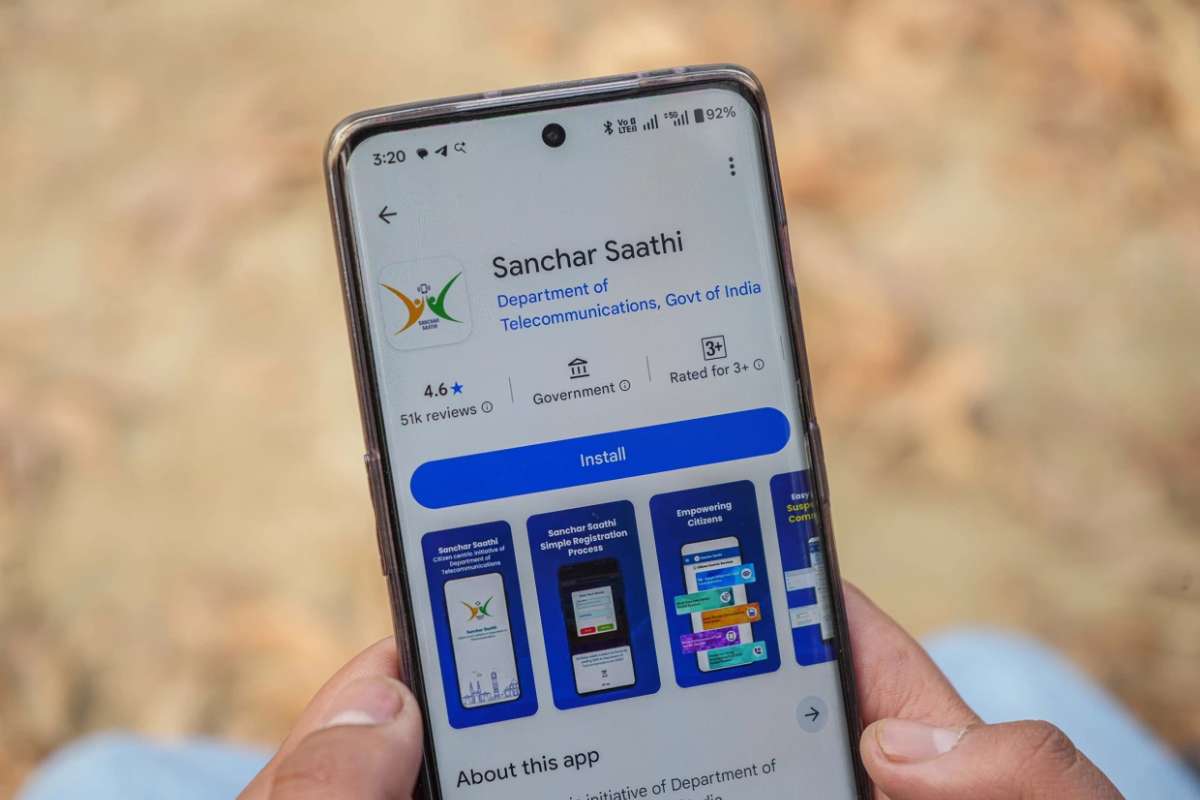
India has issued a notice requiring smartphone makers to install a government-developed tracking application called Sanchar Saathi on all devices manufactured or imported for use in the country. The order gives companies 90 days to comply and states that the tool is designed to support national cyber safety efforts and reduce phone-related crime.
The app, called Sanchar Saathi, has been promoted as a system that can help identify stolen devices, track misuse, and flag activity linked to phone-based fraud. The government said the tool could help detect incidents that undermine telecom cybersecurity and reduce the rising number of digital crime reports across the country.
Government Cites Cybercrime Growth and Device Misuse
India has more than one billion active mobile phones, making the device ecosystem one of the largest in the world. Security officials say this scale has created new opportunities for fraud, identity misuse, and phone smuggling. The country recorded more than 2.3 million cybersecurity incidents last year, a number that has more than doubled in a two-year span—one reason the government highlights the importance of Sanchar Saathi.
A government portal tracking financial crime also logged billions of dollars in losses linked to digital schemes, many of which rely on unregistered or untraceable phone numbers, further emphasizing the need for Sanchar Saathi.
The order instructs manufacturers to ensure that the app remains functional and cannot be disabled at the system level. The tool is built to operate within the device’s core software layer, which allows it to verify ownership, detect duplicate identities, and identify phones linked to suspicious activity.
Officials say the purpose is to give users a way to secure their devices, report lost phones, and confirm whether a SIM card attached to their identity has been misused.
Technical Capabilities Prompt Cybersecurity Questions
Cyber analysts note that any app installed at the system layer has the potential to access device functions at a deeper level than standard applications. These functions may include location readings, device identifiers, and information tied to SIM registration.
Experts say tools that operate at this depth can improve device recovery and fraud detection, but they also expand the technical surface area of a user’s phone. When many devices share a common system-level tool, the structure creates a single point where large volumes of data pass through the same framework.
Cybersecurity specialists also warn that centralizing too much information under one application increases the risk of new vulnerabilities if the tool is not continually updated and tested. Analysts emphasize that apps focused on cyber protection must themselves maintain strong security measures to prevent unauthorized access or system exploitation.
India’s rapid growth in digital services has made smartphones a core part of daily life, from digital payments to identity verification. Because of this reliance, security researchers say any change affecting the software environment of devices has significant impact on both individual users and service providers.
They add that new tools must balance protection needs with the overall resilience of the device ecosystem.
Device Makers Assess Compliance Requirements
The notice places responsibility on smartphone manufacturers—including global companies that supply large volumes of devices in the Indian market—to ensure the app is included on all new units. Companies are reviewing the technical requirements and evaluating how the tool will integrate into their software builds.
Manufacturers commonly coordinate with regulators to comply with telecom rules, cybersecurity directives, and local software standards. However, adding a permanent system-level component such as Sanchar Saathi requires extended testing to avoid conflicts with existing security frameworks.
Industry observers say companies may seek clarity on the technical boundaries of the Sanchar Saathi, the data it can access, and how updates will be managed across diverse devices. Because many phones run modified versions of major operating systems, integration processes may vary by brand.
Cyber Experts Highlight Broader Infrastructure Considerations
Analysts also point to the broader cyber infrastructure needed to support a nationwide device-tracking system. Large-scale data mapping, SIM verification systems, and phone-identity registries must remain secure for such tools like Sanchar Saathi to work effectively.
Experts note that India has been linking many digital datasets in recent years to streamline verification and reduce identity-based crime. This interconnected environment through can improve detection but can also increase exposure if protective measures across systems are not aligned.
The government has stated that the aim of the initiative, is to reduce phone-related fraud, improve device security, and support nationwide efforts against cybercrime. As the rollout of Sanchar Saathi progresses, cybersecurity researchers are expected to monitor how the app integrates with devices and how its system-level functions impact the wider digital ecosystem.
India’s smartphone industry now awaits further technical guidance as the 90-day compliance window continues.
Also Read: Shopify Outage Disrupts Merchant Access During High-Traffic Hours