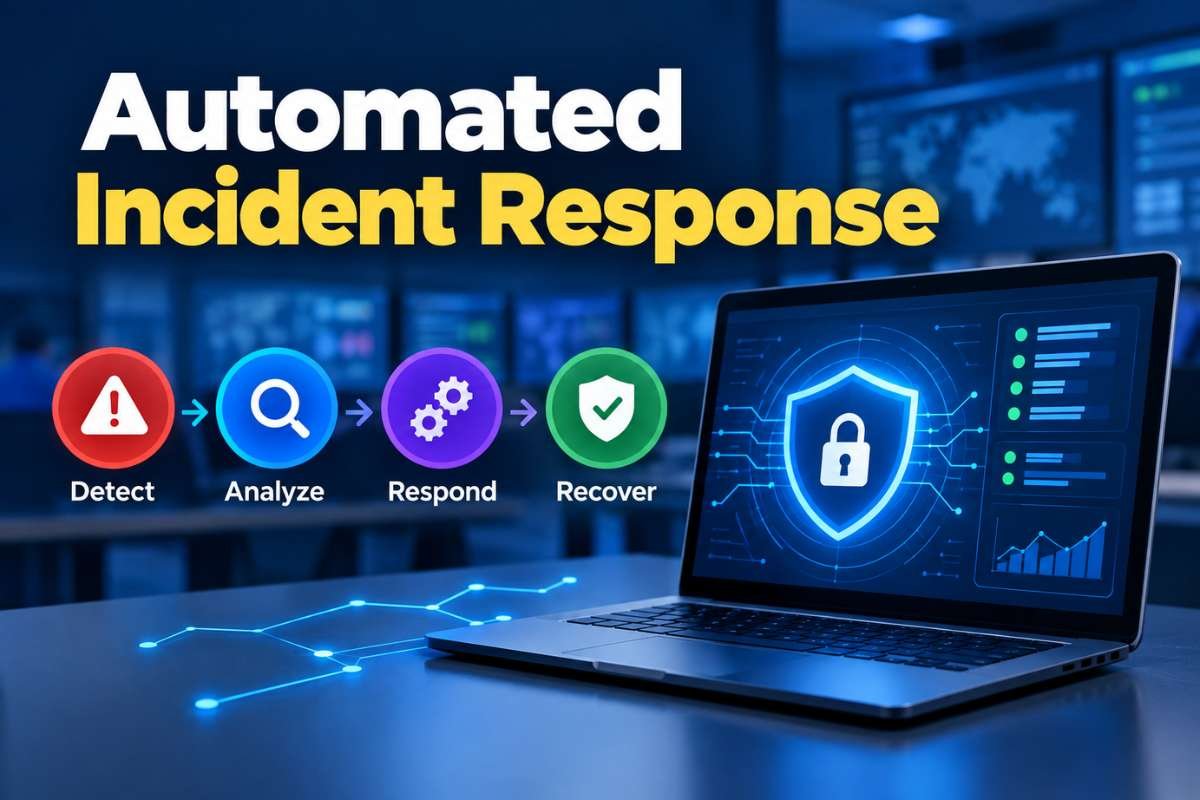
If data were money, the internet would be the world’s biggest bank. And every bank needs guards who never sleep. That is where cloud security companies step in. They protect app files, servers, and secrets floating inside the cloud. No capes. No drama. Just serious protection.
Hackers move fast. Businesses move faster. One weak login can cause chaos. One breach can kill trust overnight. These companies stop that story before it starts. They make cloud systems safer without slowing work.
In short, they keep your digital house locked while you live your life freely.
What Are Cloud Security Companies in 2026?
In 2026, cloud security companies do much more than block hackers. They protect identity data, app workloads, and connections across cloud platforms. They work inside public, private, and hybrid clouds.
These companies watch every login. They check every data request. They stop threats before damage begins. For example, when an employee logs in from a new device, security tools verify trust instantly. If malware tries lateral movement, systems shut it down in seconds.
Unlike old security tools, cloud security companies adapt in real time. They scale with growth. They support compliance laws. They protect remote teams without slowing work. That makes them critical for modern businesses.
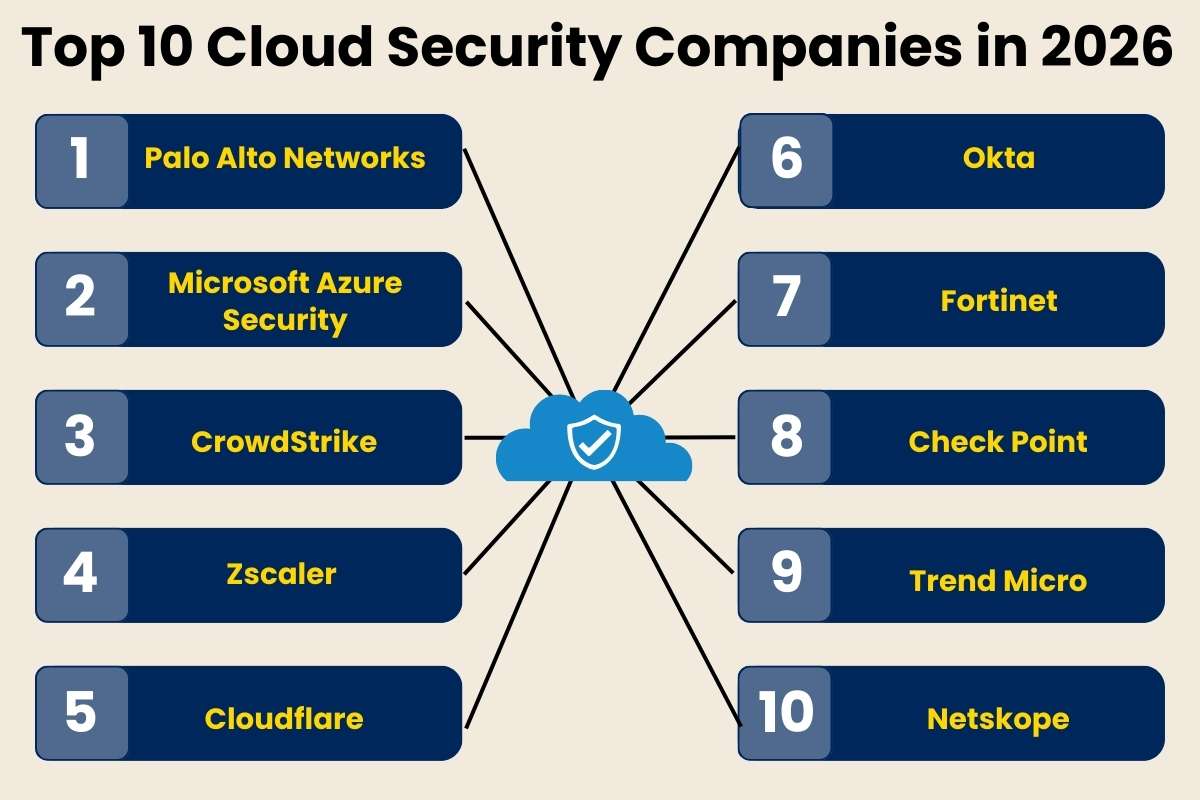
Top 10 Cloud Security Companies in 2026
10. Netskope
- CEO: Sanjay Beri
- Headquarters: Santa Clara, California
Netskope helps companies see what really happens inside their cloud apps. Many employees use tools like Google Workspace, Microsoft 365, or Slack every day. Netskope tracks how data moves inside these apps and who accesses it.
Its main strength is Secure Access Service Edge. This means users get safe access to cloud apps from anywhere without slowing down work. Netskope also studies user behavior. If something looks risky, it alerts teams early. That insight from cloud security companies makes it valuable for large enterprises handling sensitive data.
9. Trend Micro
- CEO: Eva Chen
- Headquarters: Tokyo, Japan
Trend Micro has a long history in cybersecurity, and it has adapted well to the cloud era. It protects hybrid environments where cloud security companies use both on-premise systems and cloud platforms.
Its tools secure servers, containers, and workloads across different clouds. Trend Micro also stops ransomware before it spreads. It scans systems constantly and flags weak settings that attackers often abuse. Many businesses trust it because it focuses on prevention instead of damage control.
8. Check Point
- CEO: Nadav Zafrir
- Headquarters: Tel Aviv, Israel
Check Point helps companies manage cloud security from one place. Many businesses use more than one cloud provider. That setup creates complexity. Check Point reduces that problem.
It protects workloads across AWS, Azure, and Google Cloud through a single dashboard. Teams can see threats, fix risks, and set policies without jumping between tools. Check Point also blocks advanced attacks that move quietly inside cloud networks.
7. Fortinet
- CEO: Ken Xie
- Headquarters: Sunnyvale, California
Fortinet is known for speed. Its cloud firewalls process traffic fast without reducing performance. That matters for apps that handle large user loads. Fortinet protects cloud networks, applications, and connections between systems.
It also helps companies apply the same security rules across cloud and on-premise environments. Many global enterprises choose Fortinet because it scales easily and stays reliable under pressure.
6. Okta

- CEO: Todd McKinnon
- Headquarters: San Francisco, California
Okta focuses on identity. It answers one simple question. Who should get access? Only the right people.
Okta verifies users before they enter any system. It checks passwords, devices, locations, and behavior. If something feels unsafe, access stops immediately. This approach reduces stolen credential attacks. Identity protection remains a core pillar for Cloud Security Companies, and Okta leads this area with clarity and precision.
5. Cloudflare

- CEO: Matthew Prince
- Headquarters: San Francisco, California
Cloudflare works like a strong shield placed between the internet and your website. It protects websites, apps, and APIs from attacks that try to overload systems, such as DDoS attacks. When hackers send fake traffic to crash a site, Cloudflare blocks it before it reaches the server.
What makes Cloudflare special is speed. It does not just protect; it also makes websites load faster by using,g a global network of servers. Users get quick access while threats stay out. For businesses that want security without slowing performance, Cloudflare delivers both together in a simple way.
Also Read: Safeguarding Your Digital Assets: A Deep Dive into Cloud Security Alliance
4. Zscaler

- CEO: Jay Chaudhry
- Headquarters: San Jose, California
Zscaler changes how people connect to company systems. It removes the old idea of trusting a network just because someone is inside it. Instead, every user and device must prove trust each time. This approach is called zero trust.
Employees can log in securely from anywhere without using slow VPNs. Zscaler checks identity, device health, and access rules before allowing entry. This reduces risk from stolen passwords and unsafe devices. Many modern cloud security companies follow this model, but Zscaler helped make it popular and practical.
3. CrowdStrike
- CEO: George Kurtz
- Headquarters: Austin, Texas
CrowdStrike focuses on stopping threats at their earliest stage. It watches how devices and cloud systems behave instead of waiting for known virus patterns. When something acts strangely, the system reacts immediately.
This behavior-based approach helps stop attacks that traditional tools miss. CrowdStrike protects laptops, servers, and cloud workloads together. If a threat appears on one system, it gets blocked before spreading across the network. This fast response makes CrowdStrike a trusted name for businesses that value early threat detection.
2. Microsoft Azure Security

- CEO: Satya Nadella
- Headquarters: Redmond, Washington
Microsoft Azure Security protects cloud systems built on Azure and beyond. It uses artificial intelligence to watch activity, detect risks, and suggest fixes. Identity protection plays a major role here. Every login gets checked for risk before access is allowed.
Microsoft also helps businesses meet compliance rules across regions and industries. Security tools work smoothly with Microsoft products like Windows and Microsoft 365. This deep integration makes Azure Security a strong choice for enterprises that want unified protection under one ecosystem.
1. Palo Alto Networks
- CEO: Nikesh Arora
- Headquarters: Santa Clara, California
Palo Alto Networks stands at the top because of its complete cloud security coverage. Its Prisma Cloud platform protects cloud setups from start to scale. It checks configurations, secures workloads, protects data, and monitors activity across multiple cloud providers.
Prisma Cloud helps teams fix mistakes before attackers exploit them. It also supports compliance and visibility across large environments. Among cloud security companies, Palo Alto Networks offers one of the most balanced solutions, combining prevention, detection, and control in one powerful platform.
How to Choose the Right Cloud Security Company?
Choosing the right partner for cloud protection is not about buying the most expensive tool. It is about choosing the one that fits how your business works today and how it will grow tomorrow.
1. Start With Full Visibility
First, ask one simple question.
Can you clearly see what is happening inside your cloud?
A good provider shows every login, data movement, and system action in real time. You should know who accessed what, from where, and why. Without visibility, security becomes guesswork. Strong visibility helps teams spot problems early and fix them fast before damage begins.
2. Check Identity and Access Controls
Most cloud attacks start with weak access, not weak technology.
The right solution protects identities first. It ensures only the right people get access, at the right time, and from trusted devices. Multi-factor authentication, role-based access, and smart alerts reduce risk. Strong identity control turns the cloud from an open door into a guarded entry point.
3. Look at Compliance and Regulation Support
Rules change faster than most businesses expect.
A reliable provider helps meet standards like data privacy, financial security, and industry regulations. Reports should be easy to generate and easy to understand. When audits arrive, stress should not follow. Good compliance support saves time, money, and reputation.
4. Choose Scalable Protection
Your business will grow. Your security must grow with it.
Avoid tools that work only for your current size. The right solution adjusts smoothly as users, apps, and data increase. No complex upgrades. No sudden costs. Scalable protection keeps security strong without slowing progress.
5. Evaluate Support Quality
Security tools matter. Support matters more.
When something goes wrong, speed and clarity decide outcomes. The best cloud security companies respond quickly, speak clearly, and guide teams step by step. Strong support turns panic into control and confusion into action.
Also Read: Are Your Files Really Safe? The Hidden Cloud Security Threats You Shouldn’t Ignore
Future Trends in Cloud Security
Cloud security keeps changing because threats keep changing. The next few years will bring smarter systems and fewer human mistakes.
1. Automation Will Lead Decisions
Manual checks will be reduced. Automated systems will take over routine security tasks. Alerts will trigger actions instantly. This reduces delays and limits damage before humans step in.
2. AI Will Detect Threats Earlier
Artificial intelligence will spot unusual behavior faster than people. It will identify patterns that signal danger early. This means attacks stop before they spread across systems.
3. Zero Trust Will Become Normal
Trust will no longer depend on location. Every request will get verified. Every user will prove their identity repeatedly. This approach limits internal and external risks.
4. Cloud Posture Tools Will Reduce Errors
Most cloud issues come from simple mistakes. Posture tools scan systems constantly. They flag risky settings and guide fixes. This reduces human error and improves stability.
5. Privacy Laws Will Push Better Reporting
Data protection laws will grow stricter. Businesses will need clear records and fast reporting. Cloud security companies will focus more on transparency and accountability.
6. Prevention Will Replace Reaction
By 2026, the focus will shift. Stopping attacks early will matter more than fixing damage later. Prevention will become the core strategy, not an added feature.
Facts and Stats
- 82% of breaches involve cloud-stored data.
- Cloud misconfigurations cause over 65% of incidents.
These numbers explain why cloud security companies remain essential.
Conclusion
The introduction promised safety without fear. The article proves why that promise matters. Cloud security companies keep the digital world stable while innovation runs wild. They protect quietly. They react fast. They reduce stress.
Just like seatbelts, you hope never to test them. But when trouble hits, they save everything. Smart businesses choose protection early. That choice builds trust, growth, and peace of mind.
FAQs
Q) What do cloud security companies protect most?
A) They protect identities, data, workloads, apps, and cloud access.
Q) Are cloud platforms secure alone?
A) Basic protection exists, but advanced security needs expert tools.
Q) Do startups need cloud security?
A) Yes. Small businesses face the same threats as large ones.
Q) How often should cloud security be updated?
A) Updates should run continuously in real time.
Q) Will cloud security companies replace IT teams?
A) No. They support teams and strengthen security decisions.