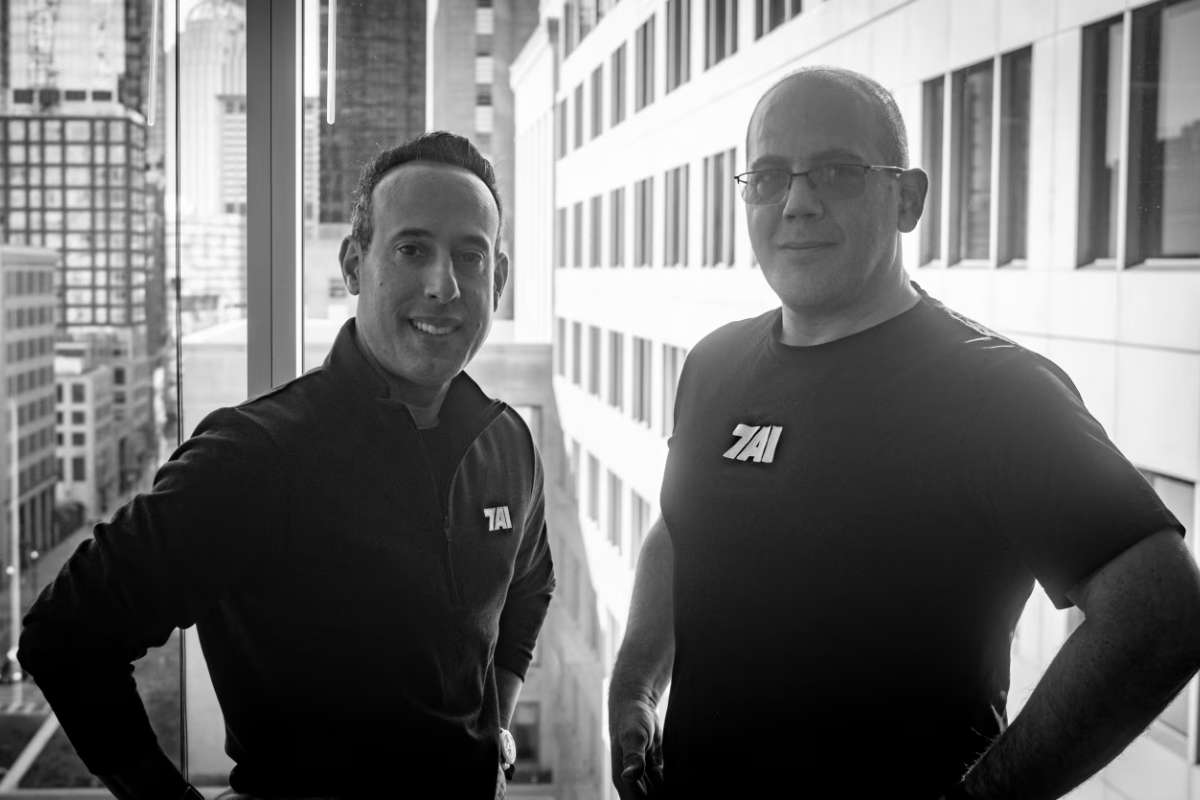
Boston-based cybersecurity company 7AI has secured 130 million dollars in new funding as part of the latest 7AI Funding Round, marking one of the largest recent investments in the agentic security space. The company was founded in 2024 by Lior Div and Yonatan Striem Amit, who previously co-founded Cybereason. In just ten months since its public launch, 7AI has drawn strong interest from investors looking at new ways to manage large-scale digital risk. This 7AI Funding Round brings its total funding to 166 million dollars. The company says the capital will support its next phase of product and team expansion.
7AI builds autonomous AI agents designed to perform high-volume security tasks normally handled by analysts, a major focus highlighted during the 7AI Funding Round. These tasks include alert triage, signal enrichment, incident correlation, and the search for known or repeat threats. Security teams often struggle with these jobs because they involve many steps and large amounts of data. 7AI aims to shift this workload to coordinated AI systems that can operate at machine speed. The company believes this approach reduces strain on teams and helps them respond faster, a key selling point emphasized throughout the 7AI Funding Round.
AI Agents Take On High-Volume Security Tasks
The company describes its technology as a network of “swarming agents” that analyze alerts from cloud systems, email platforms, identity tools, and endpoint devices. Each agent is designed to classify the alert type and direct it to the correct automated handler. This structure allows several workflows to run at once without waiting for human review. It also keeps the system active during periods when threat volume increases. According to the company, this reduces delays that commonly slow down traditional security operations, which was a major focus area discussed during the 7AI Funding Round.
Security teams today face rising workloads due to growth in cloud adoption, identity tools, and remote work patterns. Many organizations use multiple detection products, which produce overlapping data and large queues of alerts. Analysts often need hours to review and verify these alerts. 7AI’s leaders say the company’s agents complete the same work in minutes by running parallel processes and removing manual steps. This shift reflects a broader move toward autonomous cybersecurity systems and contributed to the high investor interest in the 7AI Funding Round.
Funding Supports Expanded Engineering and Operations
Index Ventures led the new funding round, with participation from Blackstone Innovations Investments and several existing investors who joined the 7AI Funding Round with confidence in its long-term potential. The company plans to grow its AI Security Engineering group, which develops the models and systems behind its agents. It also plans to expand its go-to-market team to support channel partners. 7AI has focused on a channel-first strategy since launch, aiming to scale through service providers that already manage security for large numbers of organizations. This model helps the company reach customers faster without building direct sales pipelines from scratch.
The founders say the funding will help the company prepare for broader adoption of agentic security tools. As more organizations test or deploy AI-driven systems, engineering teams must maintain accuracy, speed, and reliability across many environments. This includes building agents for new threat categories, improving correlation logic, and refining decision models. A larger engineering team allows the company to support this demand while continuing product updates.
Growing Interest in Autonomous Threat Response Tools
The agentic security model has gained attention across the cybersecurity sector as teams face increased alert volume and reduced response time. Faster digital operations give attackers more room to move after an initial intrusion. In many cases, early detection is possible but manual investigation slows down the response. Autonomous agents aim to shorten that gap by reviewing alerts the moment they appear. The tools then escalate only the issues that need human judgment. This shift aligns with the goals outlined in the 7AI Funding Round.
Investors see this trend as part of a long-term shift in how security teams operate. Manual work will remain important, but repetitive tasks may move fully to automated systems. 7AI is positioning itself in this direction by focusing on non-human work that can be structured and repeated. With its new funding, the company expects to extend its reach into more sectors that need faster and more consistent investigations. As interest in agentic security continues to grow, schools, businesses, and public agencies may explore these tools to manage rising workloads and complex digital environments—further validating the momentum created by the 7AI Funding Round.
Also Read: Taiwan Blocks Xiaohongshu for One Year Over Cyber and Fraud Risks